
Atlanta Metro Restoration Services
Long-Standing Roofing and Exterior Partner Across the Atlanta Region
Atlanta has been a core operating region for National Restoration for years, with roofing and restoration projects across the Atlanta metro spanning intown historic districts and fast-growing suburban counties alike. Our crews have worked on brick-ranch roofs in Cobb County, Craftsman bungalows in Inman Park, Tudor and Mediterranean revival estates in Buckhead and Druid Hills, and contemporary subdivisions stretching north through Alpharetta and Roswell.
We understand how Georgia's pine-belt climate, layered local code authorities, and diverse architectural fabric each shape what a quality restoration actually requires. From the City of Atlanta's Urban Design Commission to Fulton, DeKalb, Cobb, and Gwinnett county building departments, our project managers coordinate with the full Atlanta regulatory landscape without shortcuts.
Atlanta's Architectural Range
Matching materials and methods to each neighborhood's building traditions is part of what separates genuine restoration from generic replacement.
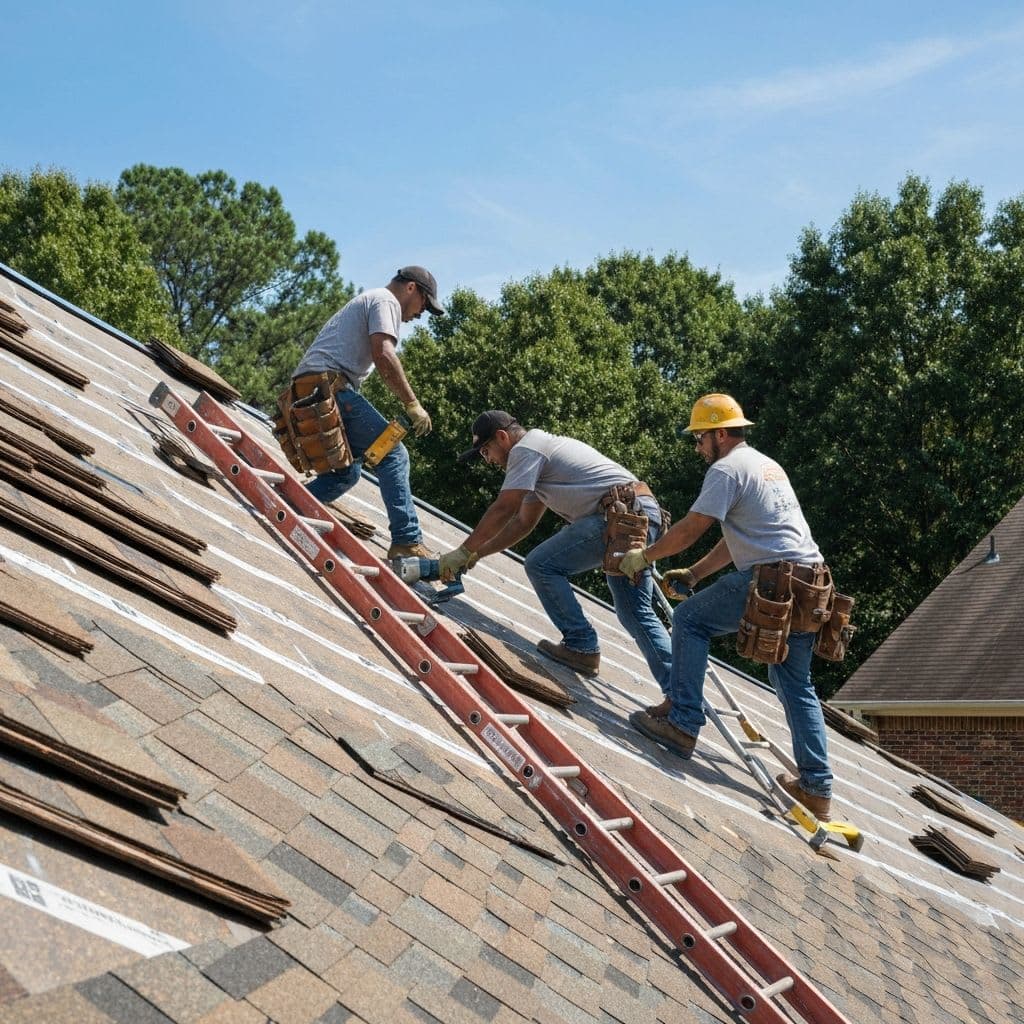
The 1960s through 1990s produced dense suburban corridors across Cobb, Gwinnett, and south Fulton. Brick-clad ranch and split-level homes in these areas typically carry original three-tab or early architectural shingles that are well past functional life. We spec Class 4 impact-rated architectural shingles for these replacements given the region's hail exposure.
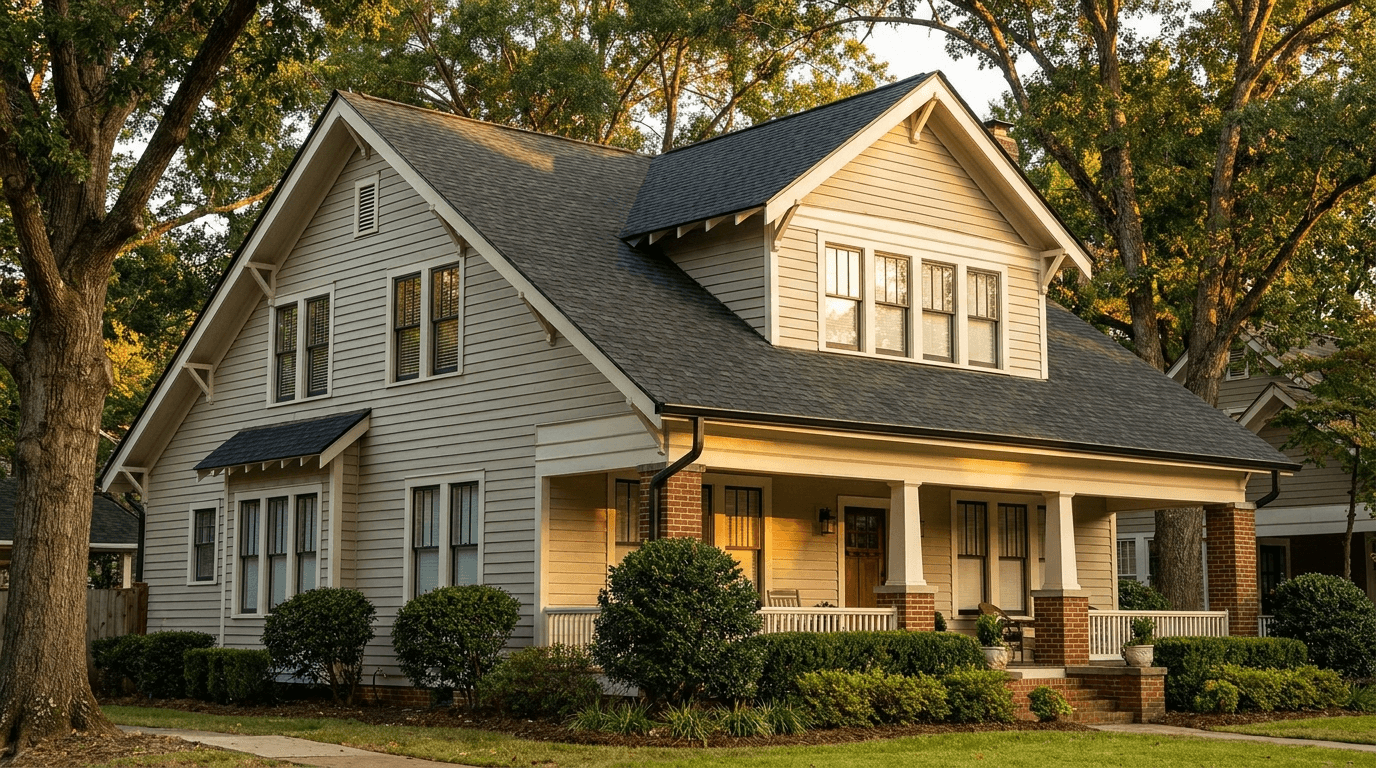
Early twentieth-century Craftsman bungalows in Inman Park, Grant Park, and adjacent Decatur neighborhoods require careful attention to roofline geometry, original eave width, and period- appropriate material profiles. Many of these properties sit within Atlanta Historic Preservation review areas, requiring pre-approved material and color submittals before work can begin.
Buckhead and Druid Hills estates from the 1920s through 1940s often feature steeply pitched Tudor rooflines, clay tile, or natural slate. Restoration on these properties demands slate and tile repair competency, custom copper flashing, and familiarity with the Druid Hills Historic District guidelines administered through the Atlanta Urban Design Commission and the Georgia Historic Preservation Division.
Low-slope and flat-roof mid-century modern homes appear throughout Ansley Park, parts of Virginia- Highland, and scattered intown neighborhoods. These require TPO or modified bitumen membrane systems rather than standard pitched-roof shingles, with proper drainage engineering to handle Atlanta's high-intensity summer rainfall.
The 1990s and 2000s development corridor north of Atlanta through Alpharetta, Johns Creek, and Cumming produced large-footprint homes with complex rooflines and multiple penetrations. Hip-and- valley configurations on these structures demand experienced crews and premium synthetic underlayment to maintain warranty compliance under Georgia's heat and humidity cycling.
Midtown and the Perimeter Center corridor include flat-roof and low-slope commercial buildings where TPO, EPDM, and modified bitumen are standard. Our commercial roofing division handles full envelope assessment, drainage mapping, and phased replacement to minimize tenant disruption on occupied properties.
Metro Atlanta Weather Patterns
Atlanta sits within the Southeast's pine-belt hail corridor. Spring severe weather systems tracking northeast from the Gulf frequently produce hail ranging from quarter-size to baseball diameter, with the northern suburbs seeing higher frequency than intown neighborhoods. This drives a strong preference for Class 4 impact-resistant shingles on new installations — a designation that can also carry insurance premium discounts under many Georgia homeowners policies.
Spring Tornado Season
Georgia sits in a secondary tornado corridor, with peak activity in March through May. Gulf-originating systems can produce tornado watches across Metro Atlanta, and remnant tropical systems in late summer extend this exposure into September and October. Wind mitigation and proper roof-deck fastening patterns per Georgia's adopted building code reduce vulnerability significantly.
Summer Thunderstorm Intensity
Atlanta averages more than fifty thunderstorm days per year. High-intensity convective events drop two or more inches of rain per hour, overwhelming undersized or degraded gutter systems. Overflowing gutters accelerate fascia rot and foundation saturation. We size gutter and downspout systems to Atlanta's actual rainfall intensity rather than generic defaults.
Pine Needle Load and Debris Accumulation
Atlanta's tree canopy is dense, and the loblolly and shortleaf pines prevalent throughout residential neighborhoods shed needles year-round. Needle accumulation accelerates shingle degradation, retains moisture against flashings, and can block gutters within a single season. Our inspection protocol specifically evaluates debris loading and gutter condition alongside structural roofing components.
Heat and Humidity Cycling
Atlanta's humid subtropical climate subjects roofing and siding materials to sustained thermal expansion and contraction across long summers. We specify products with established performance ratings in high-humidity environments and ensure proper attic ventilation is addressed alongside any roofing scope to prevent premature material failure from heat buildup.
Navigating Atlanta's Regulatory Landscape
Metro Atlanta's overlapping city, county, and historic district authorities create a regulatory environment that requires active coordination. We coordinate with local code authorities as required for the work.
Roofing and exterior work within the City of Atlanta boundaries is governed by Atlanta's Office of Buildings. Projects in unincorporated areas and other municipalities operate under their respective county or city building departments:
- Fulton County (unincorporated) and municipalities including Sandy Springs, Johns Creek, Alpharetta, Roswell, and Milton
- DeKalb County and municipalities including Decatur, Dunwoody, Tucker, and Brookhaven
- Cobb County and municipalities including Marietta, Smyrna, Kennesaw, and Acworth
- Gwinnett County and municipalities including Lawrenceville, Norcross, and Duluth
Several of Atlanta's most active restoration neighborhoods operate under the Atlanta Urban Design Commission (AUDC), which reviews exterior changes to properties in designated historic districts. Affected neighborhoods where AUDC review applies to roofing and exterior work include:
- Inman Park Historic District
- Grant Park Historic District
- Virginia-Highland Historic District
- Druid Hills Historic District (reviewed jointly with Druid Hills Landmark District)
- Cabbagetown Historic District
Properties listed on the Georgia Register of Historic Places fall under additional guidance from the Georgia Historic Preservation Division. Our project managers prepare and submit required documentation for AUDC review as part of the project scope.
Featured Atlanta Project Scopes
Representative scopes from across our Atlanta service area, covering residential and commercial projects in a range of neighborhoods. Contact us to discuss a similar scope.
Full exterior restoration on a Buckhead estate including roof replacement, custom copper flashing, and historically-appropriate trim work. Coordinated with Atlanta Urban Design Commission for material approval.
Request Similar ScopePeriod-appropriate architectural shingle reroof on a Decatur Craftsman bungalow with original eave detailing preserved. Coordinated with the City of Decatur's building department.
Request Similar ScopeHistoric exterior restoration on an Inman Park Victorian, including roofing, siding repair, and gutter replacement within the Inman Park Historic District. Full AUDC review and Certificate of Appropriateness obtained prior to work.
Request Similar ScopeHail-damage insurance restoration on a Marietta residential property, including full shingle replacement with Class 4 impact-rated product, gutter replacement, and insurance claim coordination with the homeowner's adjuster.
Request Similar ScopeCommercial flat-roof replacement on an Alpharetta retail property, including TPO membrane installation, drain repositioning, and parapet cap repair. Work phased to maintain tenant occupancy throughout.
Request Similar ScopeBuilding envelope assessment and roof restoration on a Midtown Atlanta commercial property, including EPDM membrane repair, flashing replacement, and drainage system upgrade. City of Atlanta code authority coordination handled by our project team.
Request Similar ScopeAtlanta Metro Sub-Markets
Our Atlanta operations cover the full metropolitan area, with crews positioned to respond efficiently across all major sub-markets.
High-density of pre-war estates and luxury residential requiring premium material specifications, historic district coordination, and experienced craftsmen. Our Buckhead experience includes Tudor, Colonial Revival, and Mediterranean styles.
Commercial and mixed-use concentration with flat-roof and low-slope systems. City of Atlanta code authorities apply throughout. Commercial building envelope scope is our primary work here, alongside select residential in adjacent neighborhoods like Ansley Park and Virginia-Highland.
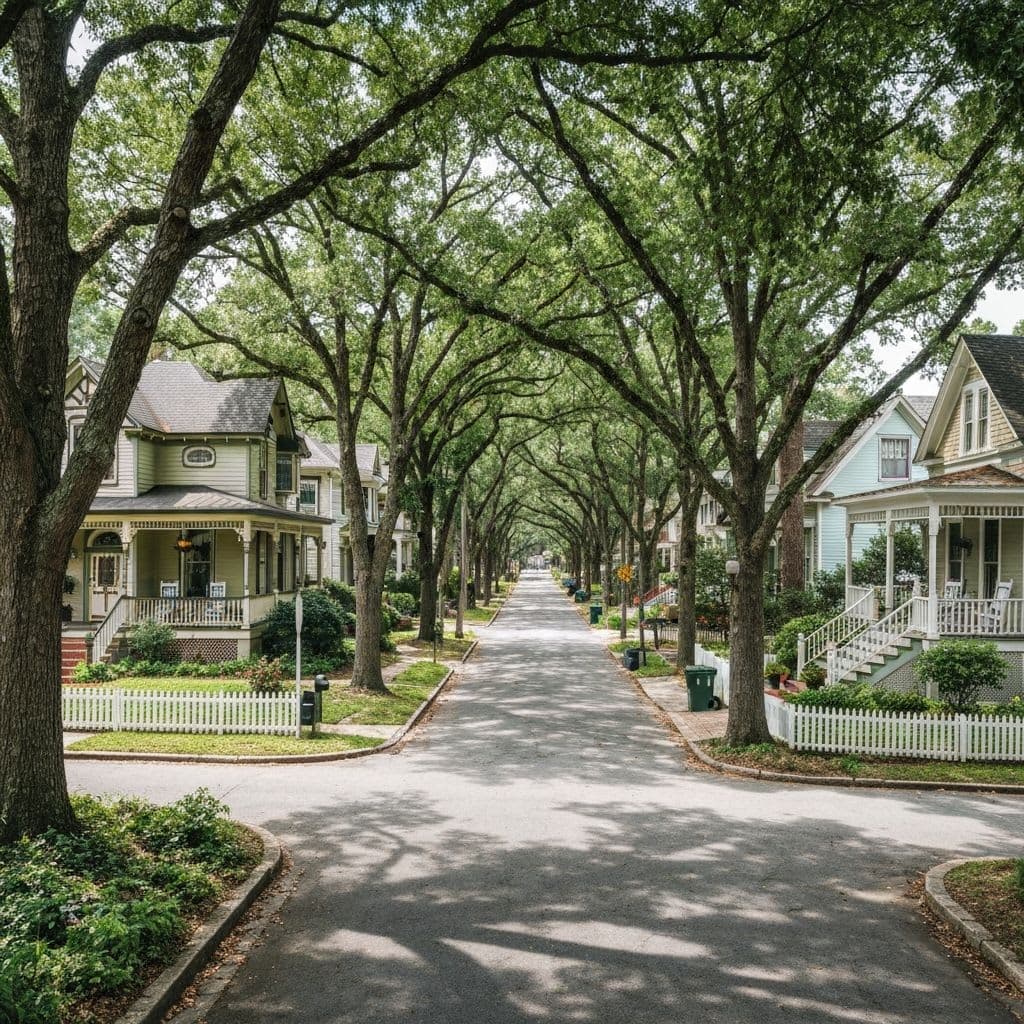
Dense Craftsman and Victorian inventory with active historic preservation review. We have extensive experience with AUDC and Decatur Historic Preservation Commission processes, including Certificate of Appropriateness submittals for roofing and siding materials.
A broad residential market spanning historic Marietta Square neighborhoods and high-volume 1980s and 1990s suburban development. Hail events in this corridor are frequent; impact-rated shingles are standard practice on all Cobb County installations.
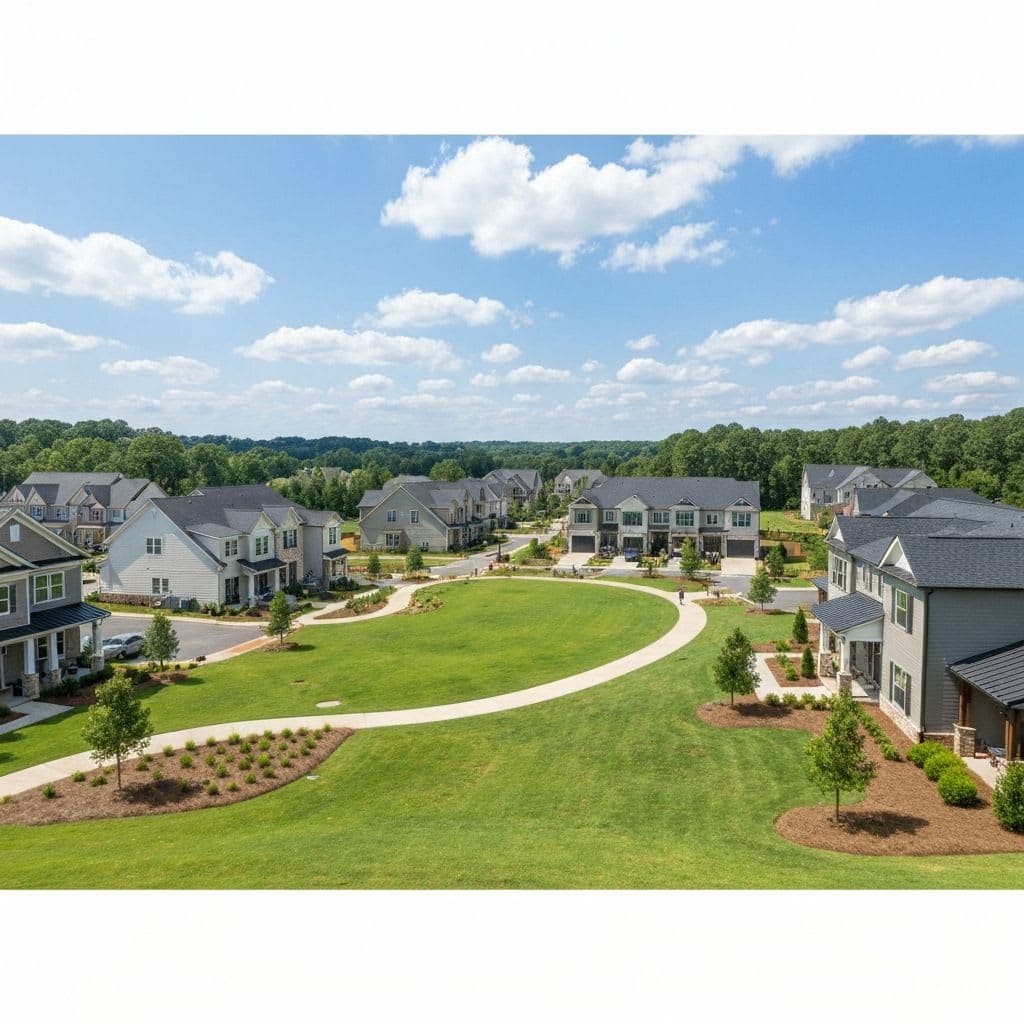
Alpharetta, Roswell, Milton, and Johns Creek represent high-volume residential and commercial opportunity. Complex rooflines, HOA-governed communities, and commercial park inventory define the work here. Code authority coordination runs through the City of Alpharetta and the respective municipal building departments.
The Druid Hills neighborhood includes one of Atlanta's most significant concentrations of historic residential architecture. DeKalb County code authority coordination and the Druid Hills Historic District landmark designation both apply to exterior work. Natural slate and clay tile competency is essential for this sub-market.

Buckhead

Midtown
Decatur
Alpharetta
Restoration and Exterior Services in Atlanta
Every scope is executed with licensed crews, premium materials, code-compliant installation, and documented inspections at each phase.
Hail, wind, tornado, and severe weather damage documentation, repair, and insurance claim coordination across Metro Atlanta.
Asphalt architectural shingles, Class 4 impact-rated shingles, metal roofing, clay and concrete tile, natural slate, TPO, EPDM, and modified bitumen systems.
Vinyl, fiber cement (Hardie), engineered wood, and cedar siding for residential and commercial properties. Historic material matching for preservation district projects.
Energy-efficient window and door replacement with products rated for Georgia's climate zone. Historic window restoration also available for preservation district properties.
Seamless aluminum gutter systems sized for Atlanta's rainfall intensity, downspout extensions, underground drainage, and gutter guard installation.
Flat and low-slope commercial roofing, building envelope assessment, waterproofing, and phased replacement for occupied retail, office, and mixed-use properties.
Emergency response, water extraction, structural drying, smoke and fire damage remediation, and full structural rebuild.
Damage documentation, adjuster coordination, scope of loss review, and supplemental claim support throughout the restoration process.
Schedule an Inspection Across Atlanta
National Restoration serves the full Atlanta metro — from Buckhead and Midtown to Marietta, Alpharetta, and Decatur. Contact us for a free inspection and scope assessment.