
Window Replacement
Energy-efficient window solutions for comfort, savings, and beauty
Window Replacement & Installation Services
Windows affect energy performance, structural integrity, occupant comfort, and code compliance. We install windows for residential and commercial properties across Atlanta, the Washington D.C. Metro area, and Ohio, sourcing from product lines including Andersen, Pella, Marvin, and ProVia.
Every installation follows IRC R308 glazing requirements and IECC energy-code minimums for U-factor and Solar Heat Gain Coefficient (SHGC). In coastal-adjacent zones, we apply IRC R609 storm-resistant glazing standards. Glass options include Low-E coatings, argon gas fill, and triple-pane configurations — each selected based on the regional climate and the building's energy profile.
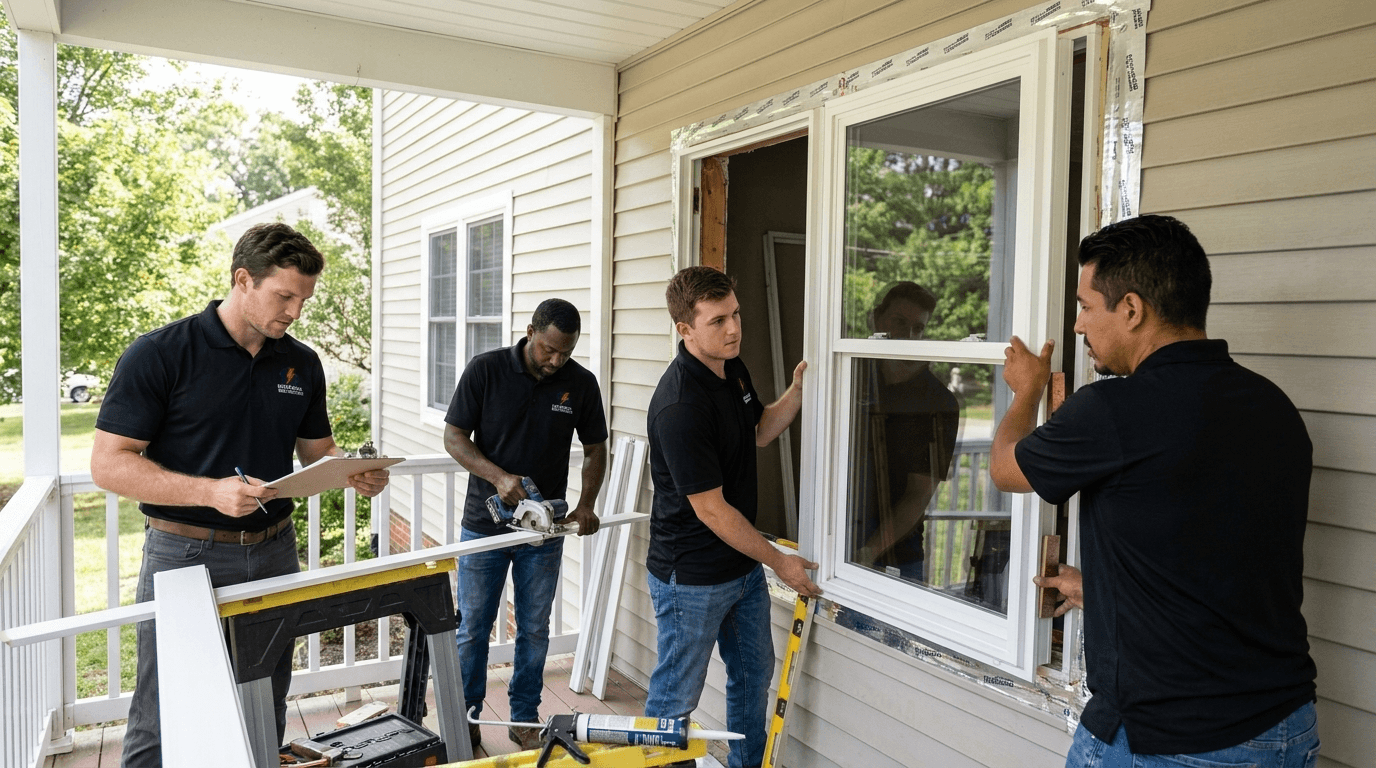
Our installation sequence follows a defined flashing protocol — sill pan flashing, jamb flashing, and head flashing — all integrated with the weather-resistive barrier (WRB) to prevent water intrusion at the rough opening. Interior casing and air sealing complete the installation to finished spec.
- Double-Hung Windows
- Casement Windows
- Slider Windows
- Awning Windows
- Bay & Bow Windows
- Picture & Custom-Shape
- ENERGY STAR® Certified
- Low-E Glass Options
- Argon Gas Filling
- Triple-Pane Options
- Custom Sizes & Shapes

The Advantages of New Windows
Modern replacement windows offer numerous benefits that improve your home's comfort, appearance, and value.
Modern windows with double or triple-pane glass, low-E coatings, and proper insulation can significantly reduce heating and cooling loads. ENERGY STAR certified windows are independently rated for U-factor and SHGC, providing a measurable baseline for energy performance improvement.
New windows eliminate drafts and cold spots near windows, maintaining more consistent indoor temperatures throughout your home. They also reduce heat gain in summer, keeping your home cooler and more comfortable.
Dual-pane windows with insulated glass provide meaningful sound attenuation compared to single-pane windows. STC (Sound Transmission Class) ratings vary by glass type and assembly; laminated glass options offer the highest STC performance for urban environments.
Modern windows feature improved locking mechanisms, stronger frames, and impact-resistant glass options that provide better protection against break-ins and severe weather events.
Energy-efficient windows are a recognized selling point for buyers. ENERGY STAR certification and documented U-factor ratings are verifiable performance attributes that can be disclosed in property listings and appraisals.
Low-E glass coatings block a substantial portion of UV radiation that causes fading in furniture, flooring, and artwork. Spectrally selective Low-E formulations maintain visible light transmittance while rejecting infrared and UV wavelengths — protecting interiors without darkening the space.
The Window Replacement Process
Our streamlined process ensures your window replacement project is completed efficiently with exceptional results.
We inspect the rough opening for rot, water intrusion, and insulation gaps before any work begins. R-value of surrounding insulation is documented.
We present product lines matched to your climate zone and energy code requirements: Andersen 400 Series or A-Series, Pella Lifestyle or Impervia, Marvin Elevate or Essential, ProVia Endure or Aeris.
Field measurements are taken and the flashing sequence is planned: sill pan flashing, jamb flashing, then head flashing — each integrated with the weather-resistive barrier (WRB).
Installation follows IRC R308 glazing requirements, IECC energy-code minimums for U-factor and SHGC, and IRC R609 storm-resistant glazing standards where applicable. Trim and interior casing are finished to spec.
We conduct a thorough quality check covering air sealing, operation of all sashes, and proper drainage of the sill pan assembly. You receive documentation of the installed U-factor and SHGC ratings.
Quality Window Materials
We offer a variety of premium window materials to suit your style, performance needs, and budget.

Thermally welded vinyl frames deliver strong insulation with minimal maintenance. Pella Lifestyle Series and ProVia Aeris are available in vinyl with fusion-welded corners and multi-chamber frame construction.
Fiberglass frames — including Pella Impervia and Marvin Elevate — resist warping, expansion, and contraction across extreme temperature swings, making them well-suited for Ohio winters and Atlanta summers.

Andersen A-Series and Marvin Elevate feature interior wood with aluminum or fiberglass exterior cladding — classic aesthetics with weather-resistant protection and low exterior maintenance.

Narrow-profile aluminum frames suit contemporary commercial and multi-family applications. Thermally broken frames meet IECC commercial energy minimums for U-factor performance in D.C. Metro and Ohio climate zones.
Not sure which window material is right for your home? Our window specialists will help you compare options and select the perfect windows for your property, climate, and aesthetic preferences.
Schedule a ConsultationExplore Window Styles
Choose from a variety of window styles to enhance your home's architecture and meet your functional needs.
Double-Hung Windows
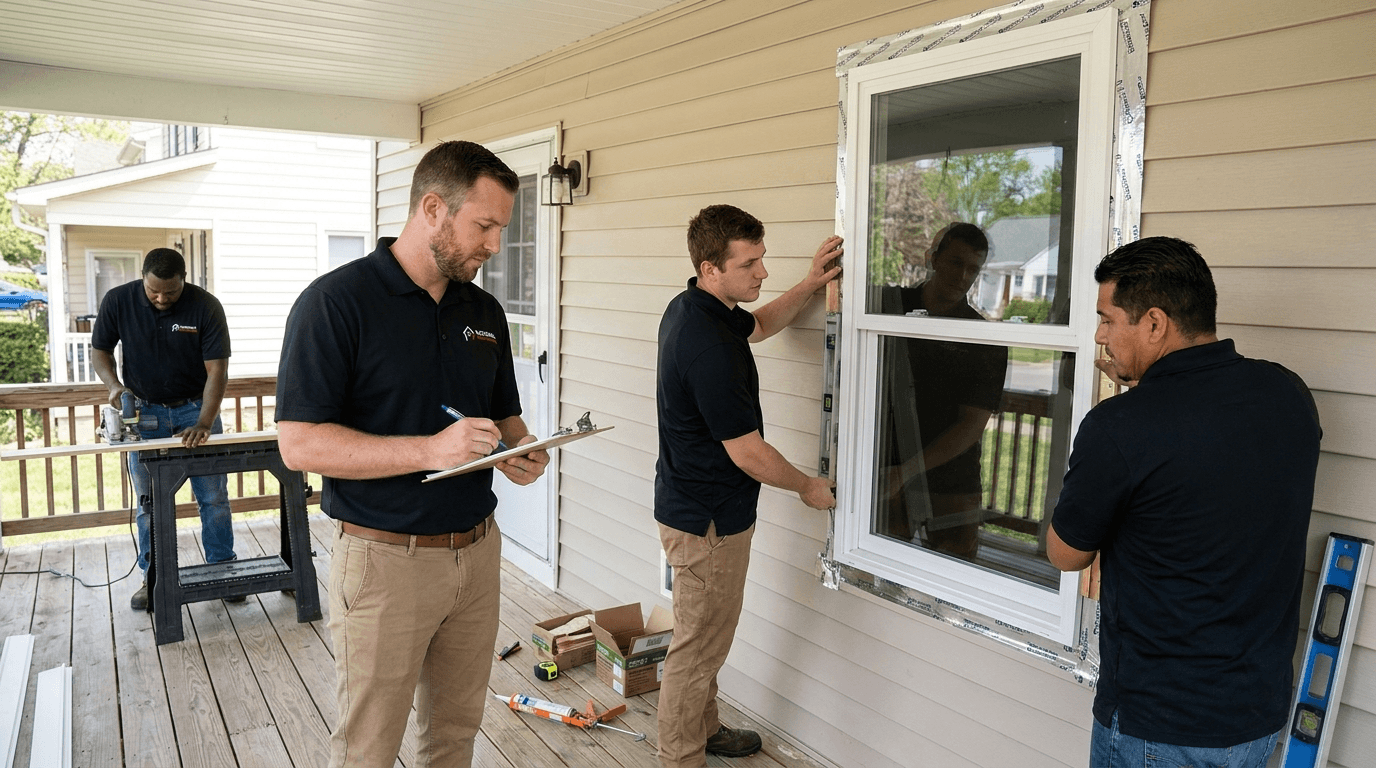
Double-hung windows feature two operable sashes that move up and down, allowing for ventilation from the top, bottom, or both. This classic style works well in traditional and contemporary homes alike.
- Easy cleaning with tilt-in sashes
- Excellent ventilation options
- Works with most architectural styles

Casement Windows
Casement windows are hinged on one side and open outward like a door, offering full-ventilation and unobstructed views. They provide excellent energy efficiency due to their tight seal when closed.
- Maximum ventilation
- Superior energy efficiency
- Excellent security features

Sliding Windows
Sliding windows open horizontally along a track, making them ideal for spaces with limited exterior clearance. They provide excellent views and are often used in modern and contemporary homes.
- Space-saving design
- Easy operation
- Minimal maintenance

Bay & Bow Windows
Bay and bow windows project outward from your home, creating additional interior space and dramatic curb appeal. They allow abundant natural light and provide panoramic views of the outdoors.
- Creates additional interior space
- Dramatic architectural feature
- Increased natural light
Frequently Asked Questions
Get answers to common questions about window replacement.
Signs that indicate window replacement is needed include: drafts or air leaks, condensation or frost between glass panes, difficulty opening/closing, visible damage or warping, increasing energy bills, and excessive outside noise. Older single-pane or early double-pane windows often fall short of current IECC energy-code minimums and are good candidates for replacement.
A professional installation team can typically replace 8-10 windows in a single day. The exact timeline depends on the number of windows, complexity of installation, and any custom requirements. Most residential projects are completed within 1-2 days with minimal disruption to your home.
Key features include: double or triple glazing, low-E glass coatings, argon or krypton gas filling between panes, quality frame materials with insulation, warm-edge spacers, and proper weatherstripping. Look for ENERGY STAR certification and check the window's U-factor and Solar Heat Gain Coefficient (SHGC) ratings.
Yes, we install windows year-round, including winter months. Our installation teams use specialized techniques to minimize heat loss during the process, typically working on one window at a time. Winter installations can actually help you immediately realize energy savings during the heating season.
Yes, there are often federal tax credits available for ENERGY STAR certified windows. Additionally, some utility companies and state programs offer rebates or incentives. Our team can provide current information on available tax credits and rebates during your consultation.
Window materials carry the manufacturer's published coverage — terms, duration, and transferability vary by product line. We hand over the manufacturer's coverage documents at project closeout for you to register and reference.
Window Installation Across Our Service Regions
We install windows in three primary markets, each with distinct climate and code considerations.
Atlanta falls in IECC Climate Zone 3A (warm-humid). ENERGY STAR window requirements emphasize a low Solar Heat Gain Coefficient (SHGC ≤ 0.25) to limit solar heat gain. Low-E glass with a spectrally selective coating is the standard specification. Hurricane-impact glazing per IRC R609 is relevant for properties in storm-exposure categories near the Gulf Coast corridor.
- IECC Zone 3A compliant specs
- Low-SHGC Low-E glass standard
- Storm-resistant glazing options
The D.C. Metro area spans IECC Climate Zone 4A (mixed-humid), covering Virginia, Maryland, and D.C. jurisdictions. Window specifications balance winter U-factor performance (U ≤ 0.30 per ENERGY STAR Northern) with summer SHGC control. Many historic districts in the region have AHJ-specific glazing requirements for replacement windows in contributing structures.
- IECC Zone 4A dual-performance specs
- Low-E argon double- and triple-pane
- Historic district AHJ coordination
Ohio falls primarily in IECC Climate Zone 5A (cold-humid). U-factor performance is the primary metric (U ≤ 0.27 for ENERGY STAR North-Central). Triple-pane glazing and warm-edge spacer systems are commonly specified. Argon or krypton gas fill between panes reduces conductive heat loss through the IGU (insulated glass unit) during extended cold-weather periods.
- IECC Zone 5A cold-climate specs
- Triple-pane with argon/krypton fill
- Warm-edge spacer IGU systems
Ready to Transform Your Home?
Contact us today for a free window consultation and estimate. Discover how new windows can improve your home's comfort, efficiency, and appearance.