
Flagship Service Region
Washington D.C. Metro Restoration Services
Proudly Serving Washington D.C., Northern Virginia & Maryland
National Restoration's Flagship Region
The Washington D.C. Metro is National Restoration's most active service region, with hundreds of roofing and siding projects completed across Northern Virginia and Maryland. Our crews work daily in Germantown, Silver Spring, Gaithersburg, Rockville, Arlington, Bethesda, Fairfax, Woodbridge, and dozens of communities in between.
The region's complexity demands a contractor who can operate at every level: managing a CHAP certificate-of-appropriateness in a Baltimore historic district on Tuesday, replacing wind-lifted shingles across an Ashburn HOA on Wednesday, and coordinating a commercial TPO replacement in Crystal City on Thursday. That breadth is what we do.
From the colonial-era rowhomes of Georgetown and Alexandria to the post-war ranches of Silver Spring and the contemporary estates of McLean and Potomac, every project receives the same standard: licensed crews, coordinated insurance claims, and materials rated for the Mid-Atlantic climate.
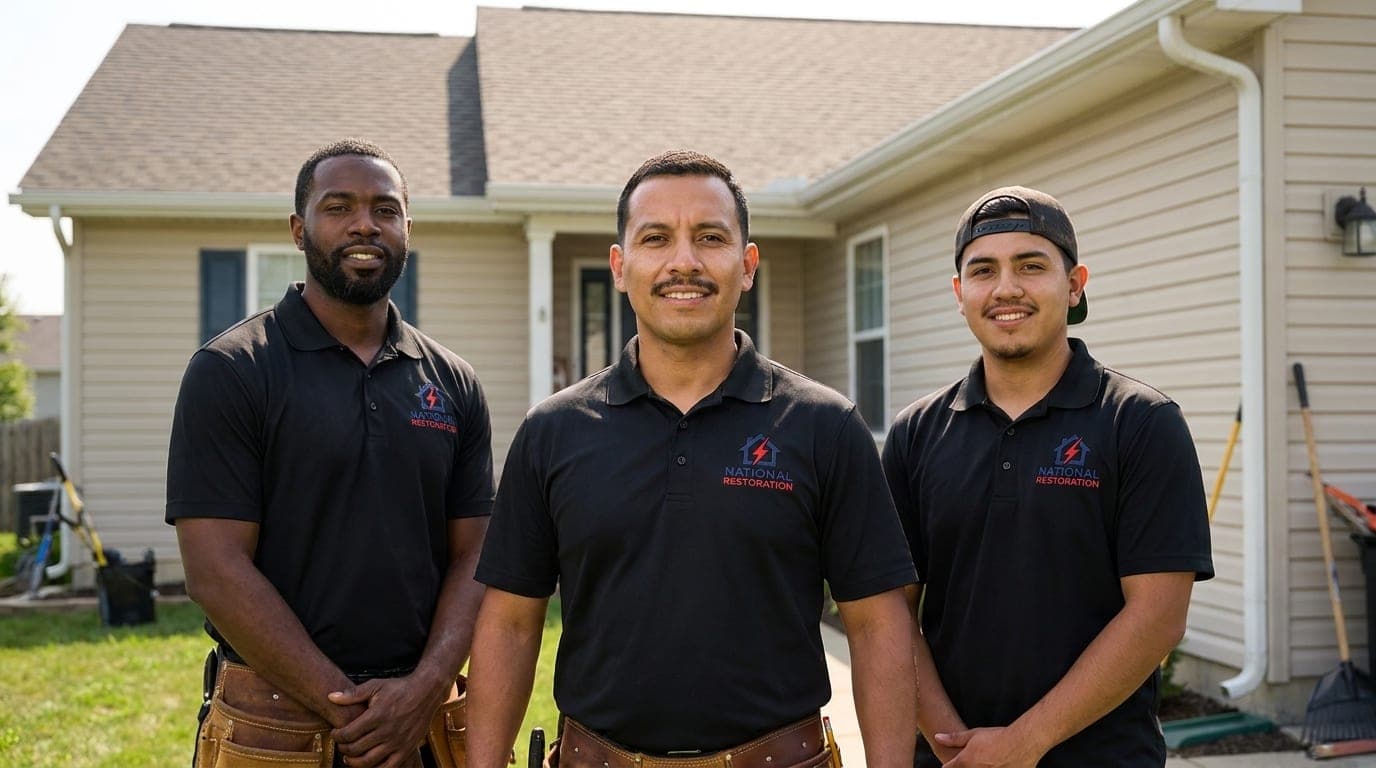
How We Operate
Document
Our professional inspectors photograph every impact zone, measure every surface, and produce a carrier-ready damage report before the adjuster steps on-site. We speak the same Xactimate language your insurer uses — so nothing gets missed and supplement cycles are minimized.
Coordinate
We coordinate with local code authorities as required across the D.C. Metro region — and manage HOA, CHAP, and HPRB review where applicable. Historic overlay? HOA approval? We handle the paperwork so the project timeline stays on track.
Restore
Licensed crews. Materials rated for the Mid-Atlantic climate — ice-and-water shield at every eave and valley, freeze-thaw–grade flashing, and algae-resistant granule systems for the humid summers. Every project backed by a 5-year workmanship warranty (longer terms available with system upgrades).
Dedicated Teams Across the Metro
Each sub-region has its own historic overlay requirements and dominant housing stock. We maintain crews experienced with each jurisdiction.
Pre-war brick colonials, Old Town historic district (BAR review), HOA-dense Ballston/Clarendon corridor, and Rosslyn high-rise commercial.
View Sub-RegionHOA-governed planned communities (Reston, Ashburn, Brambleton), McLean and Great Falls estates, Fairfax and Loudoun County coordination.
View Sub-RegionBethesda/Chevy Chase colonials, Silver Spring mid-century, Germantown/Rockville HOA communities, M-NCPPC review process, and Takoma Park HPC.
View Sub-RegionChesapeake-coastal clapboard, historic Annapolis HPC oversight, salt-air corrosion protocols, and hurricane-rated attachment on waterfront properties.
View Sub-RegionRowhouse flat roofs (TPO/EPDM), formstone and brick masonry, CHAP historic district review, and Baltimore County coordination for Towson/Pikesville/Catonsville.
View Sub-RegionDC HPRB historic overlay for Georgetown/Capitol Hill, DCRA coordination, and federal agency coordination for government-adjacent commercial work.
Request ServiceEvery Era of American Architecture
The D.C. Metro contains one of the most architecturally diverse housing stocks in the country. Restoration work here demands knowledge that no single-market contractor can match.
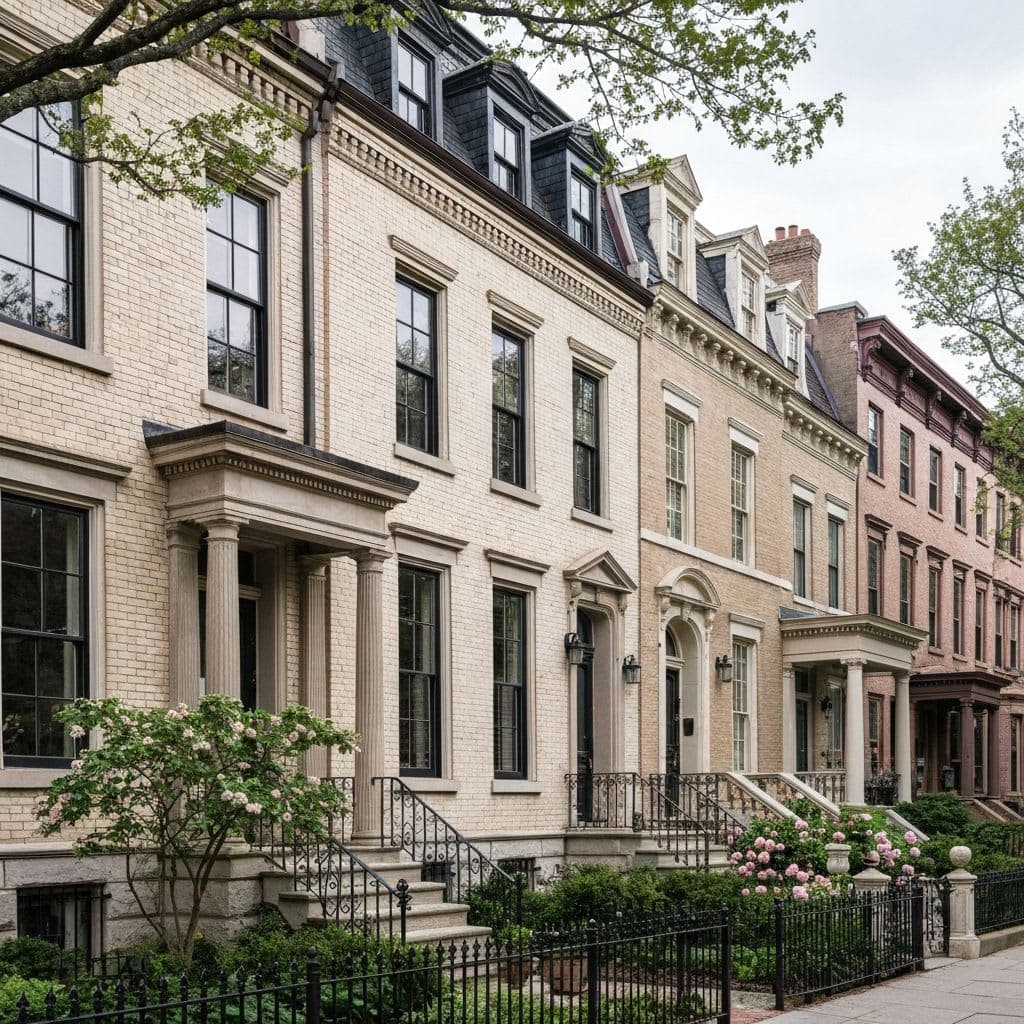
Georgetown, Old Town Alexandria, Annapolis Historic District, and Fells Point contain the highest concentration of 18th-century colonial and Federal-style buildings in the nation. Cedar shingle roofs, hand-split clapboard, and period-accurate copper flashings are standard requirements. Historic review boards govern material selection on every façade change.
Baltimore's Bolton Hill and Mount Vernon, Roland Park's Shingle-Style estates, and DC's Dupont Circle and Logan Circle feature ornate Italianate, Queen Anne, and Second Empire architecture. These buildings commonly have mansard slate roofs, decorative cornices, and complex valley systems that require specialized restoration skills.
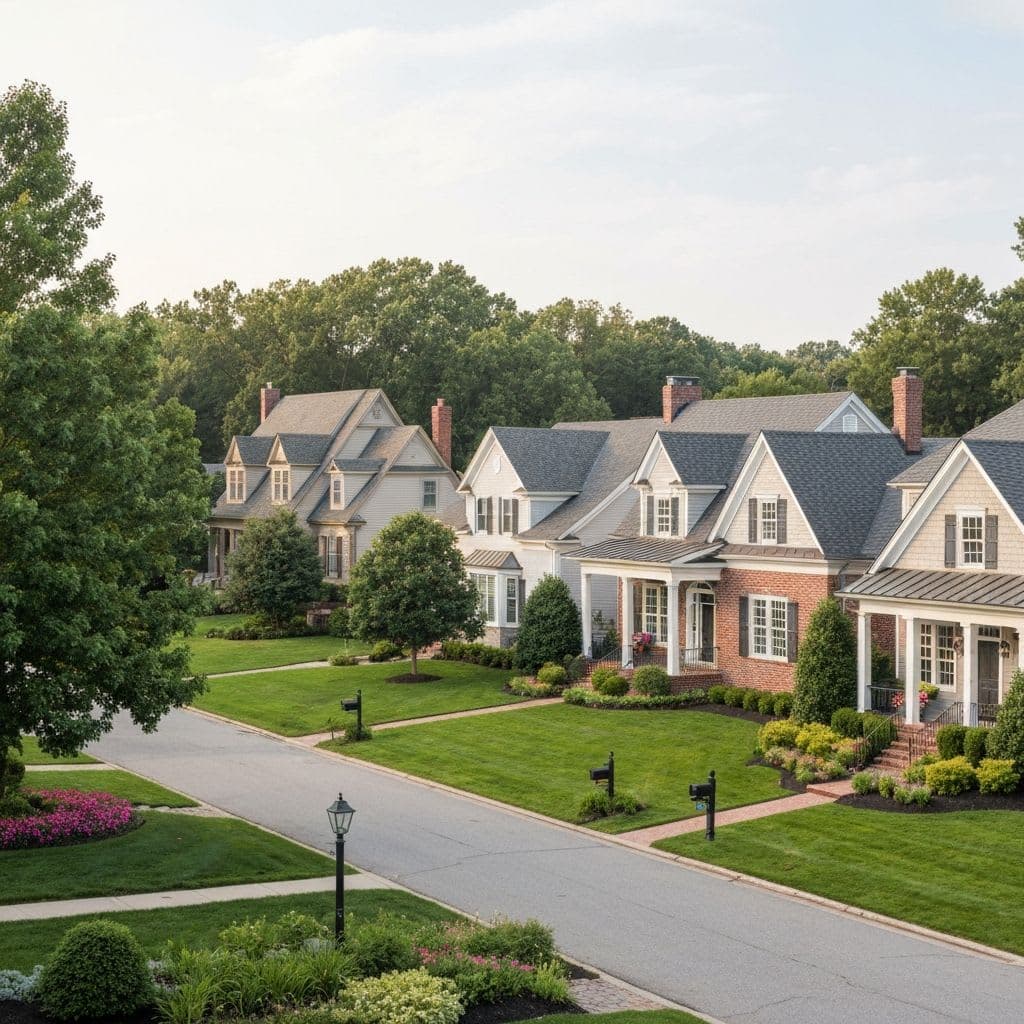
Post-war suburban expansion produced thousands of Cape Cods and Colonial Revivals across Arlington Ridge, Silver Spring, Takoma Park, and Bethesda. These homes frequently have under-insulated attic spaces that produce ice dams in winter and are prime candidates for full shingle replacement after hail events.
The 1950s–70s suburban boom left a large inventory of single-story ranches and split-levels across Fairfax, Montgomery, and Prince George's counties. Low-slope or shallow-pitch roofs on these homes require attention to ice-and-water underlayment and ventilation to prevent moisture accumulation.
Baltimore and DC contain tens of thousands of attached brick rowhouses spanning from the 1830s to the 1960s. These buildings share party walls, have low-slope or near-flat roofs, and require coordinated replacement across multiple units to prevent water migration between properties. Parapet flashing and scupper drainage are the dominant failure points.
McLean, Great Falls, Potomac, and Gibson Island contain a significant inventory of architect- designed custom homes with standing-seam metal roofs, synthetic slate, and complex multi-plane roof geometries. These projects require precision-fit metal work and manufacturer-certified installation to maintain warranty coverage.
Why Choose National Restoration
Our D.C. Metro branch, based in Vienna, Virginia, is supported by regional field offices throughout Washington D.C., Northern Virginia, and suburban Maryland. This structure allows us to respond quickly to emergencies while maintaining the high standards of a nationally recognized restoration company.
Our licensed professionals are trained to coordinate with local code authorities, HOA regulations, and historic preservation guidelines—so your project is compliant, efficient, and stress-free from start to finish.
D.C. Metro Services
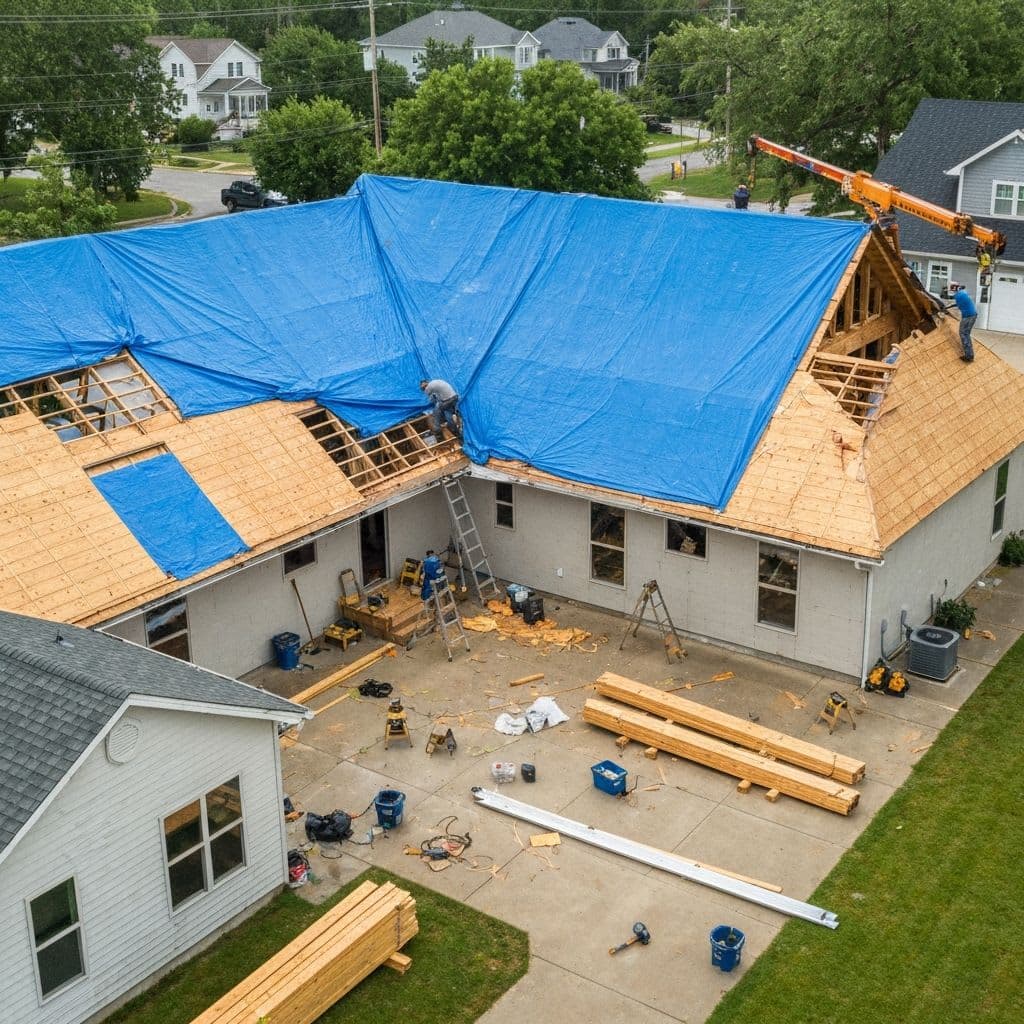
The Mid-Atlantic is no stranger to high winds, hail, and heavy rain. Our storm restoration specialists provide full-service recovery—from emergency tarping to full roof, siding, and gutter replacements—with direct insurance claim support to ensure you get the coverage you deserve.

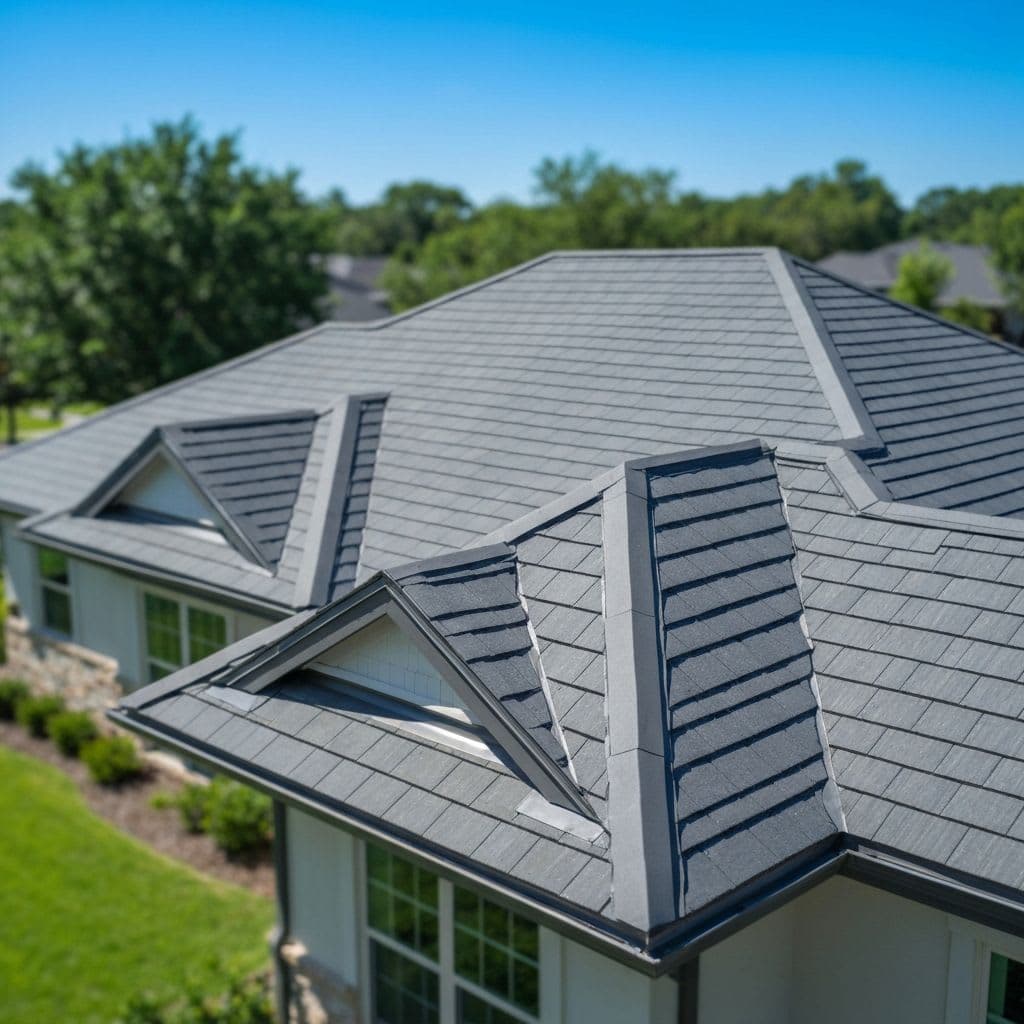
We install and repair asphalt shingles, standing-seam metal roofs, TPO/EPDM commercial systems, and more. Each system is tailored for D.C.'s variable climate, from humid summers to freezing winters. We also handle siding, windows, gutters, and trim, ensuring a complete weather-tight envelope.
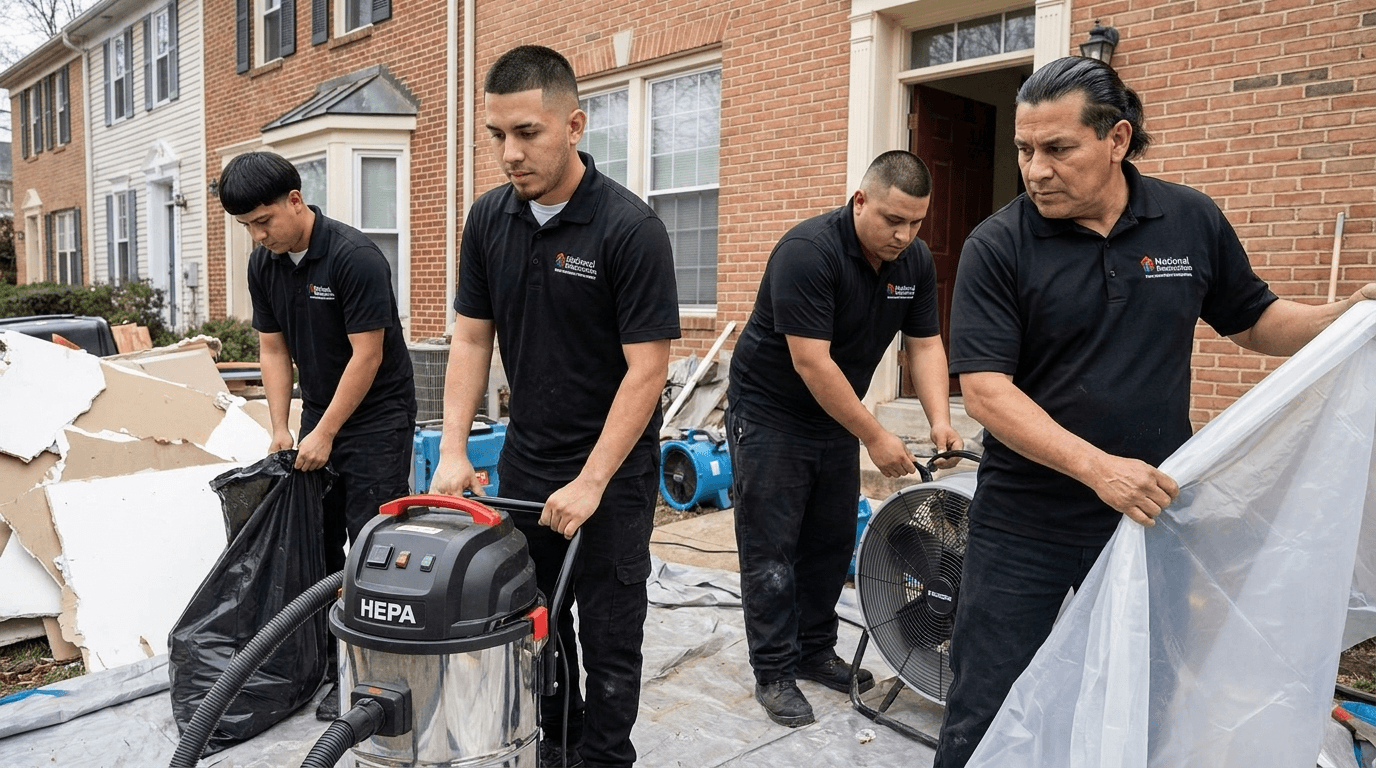
Our experienced technicians manage every step of the restoration process—extraction, drying, cleaning, deodorization, and reconstruction—with advanced equipment and proven techniques. We restore your property safely, efficiently, and with care.

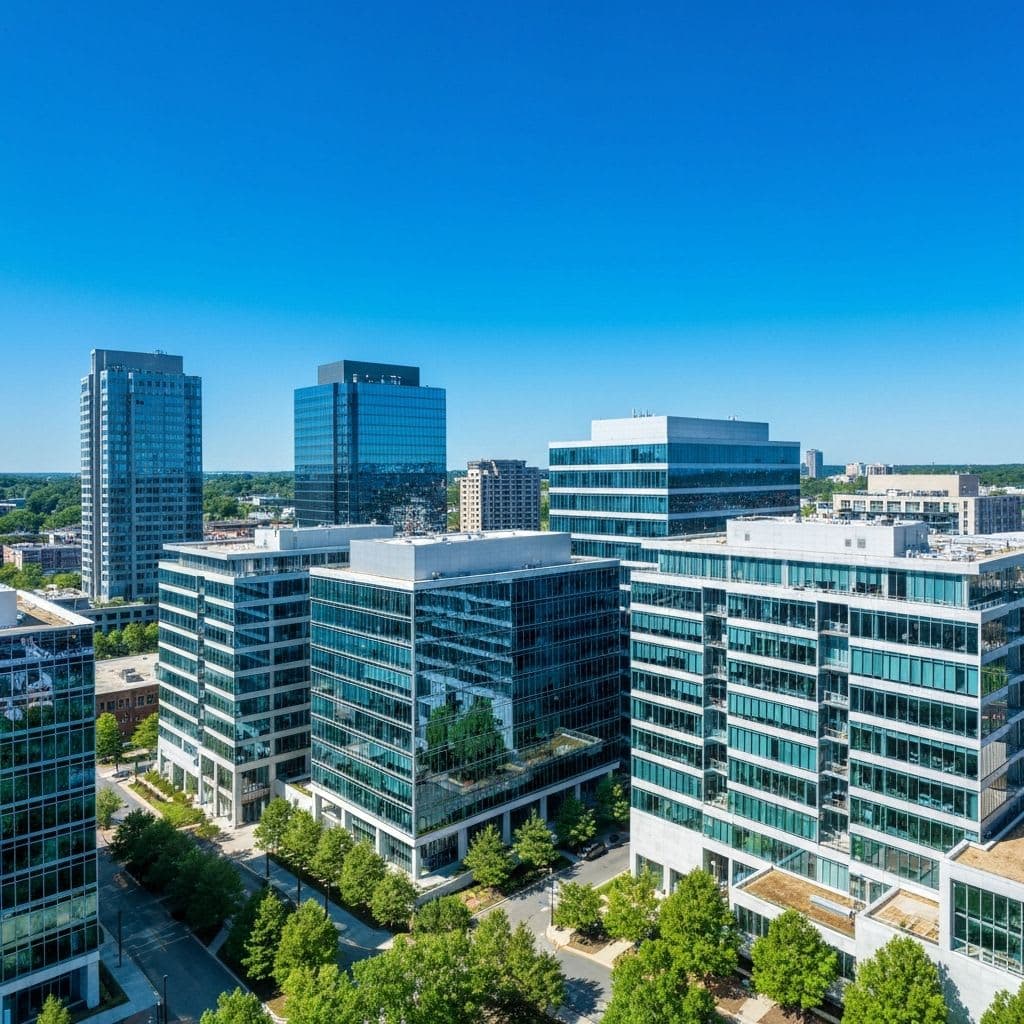
From multi-family housing to Class-A office buildings, our commercial restoration division delivers durable solutions with minimal disruption. We coordinate directly with property managers, tenants, and adjusters to maintain operations and timelines.
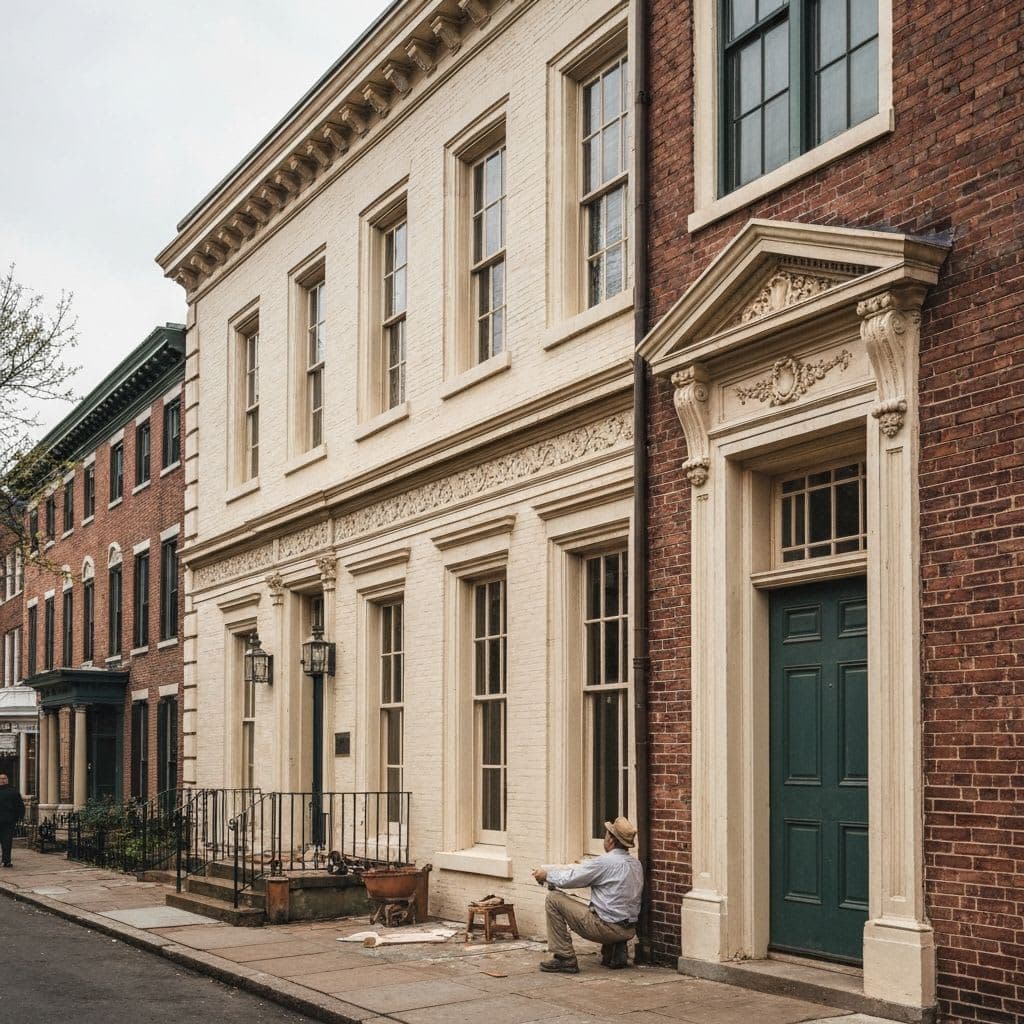
D.C. and Old Town Alexandria are filled with architectural treasures. Our team works closely with historic review boards, using period-accurate materials and finishes to preserve character while upgrading performance and efficiency.
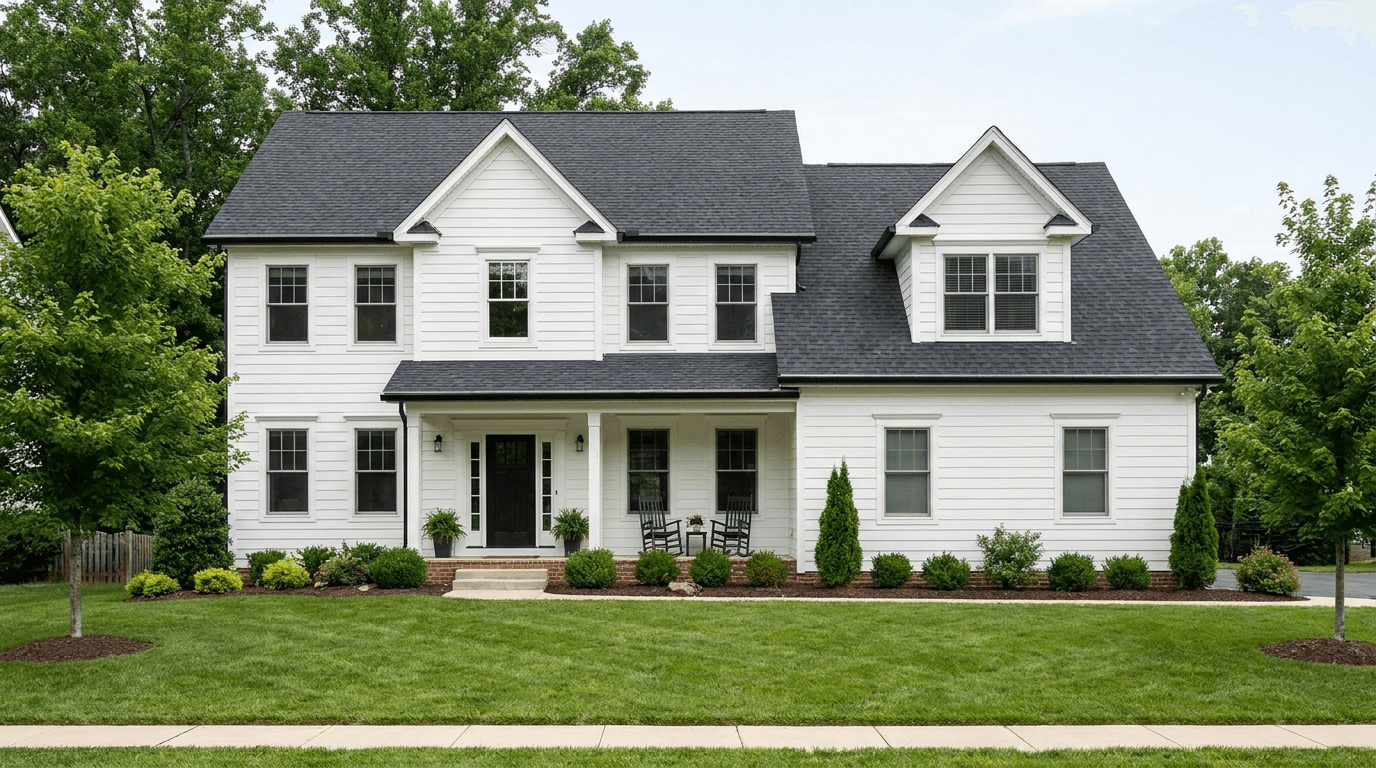
Washington's four distinct seasons demand flexible, durable construction. Our restoration and exterior systems are engineered to withstand intense summer heat & humidity, heavy rain & tropical remnants, winter snow & ice, and wind & hail impacts.
DC Metro Weather: What Damages Roofs Here
The Mid-Atlantic sits at the intersection of continental air masses and Atlantic moisture pathways. The result is a climate that produces more varied and intense storm damage than most homeowners anticipate.
The June 2012 derecho ranks among the most destructive wind events in DC Metro history, with straight-line winds exceeding 80 mph across Fairfax, Montgomery, and DC proper. Derechos lift shingles, topple mature hardwoods, and cause structural roof damage across wide swaths of the region in a single hour.
Hurricane remnants track up the Chesapeake corridor regularly. Tropical Storm Isaias (2020) and the remnants of Florence (2018) each dropped 4–8 inches of rain across the metro in under 24 hours, overwhelming valley flashings, overflowing gutters, and flooding basements on homes that had no visible damage before the storm.
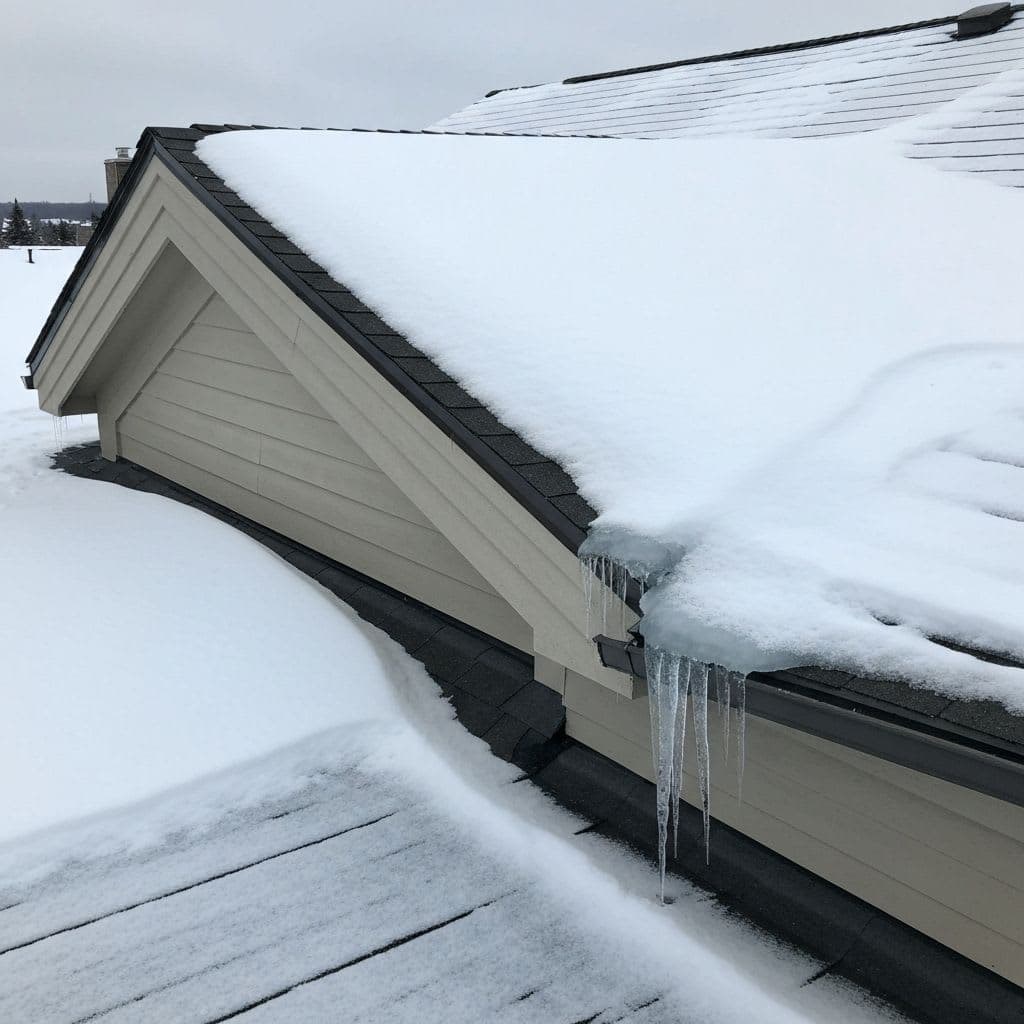
DC winters cycle through freezing and thawing more than colder northern cities, which accelerates ice-dam formation on under-insulated attic spaces. Pre-war and post-war homes throughout Silver Spring, Bethesda, and Arlington are particularly vulnerable. Ice-and-water underlayment on the first three feet from the eave is standard on all our replacements.
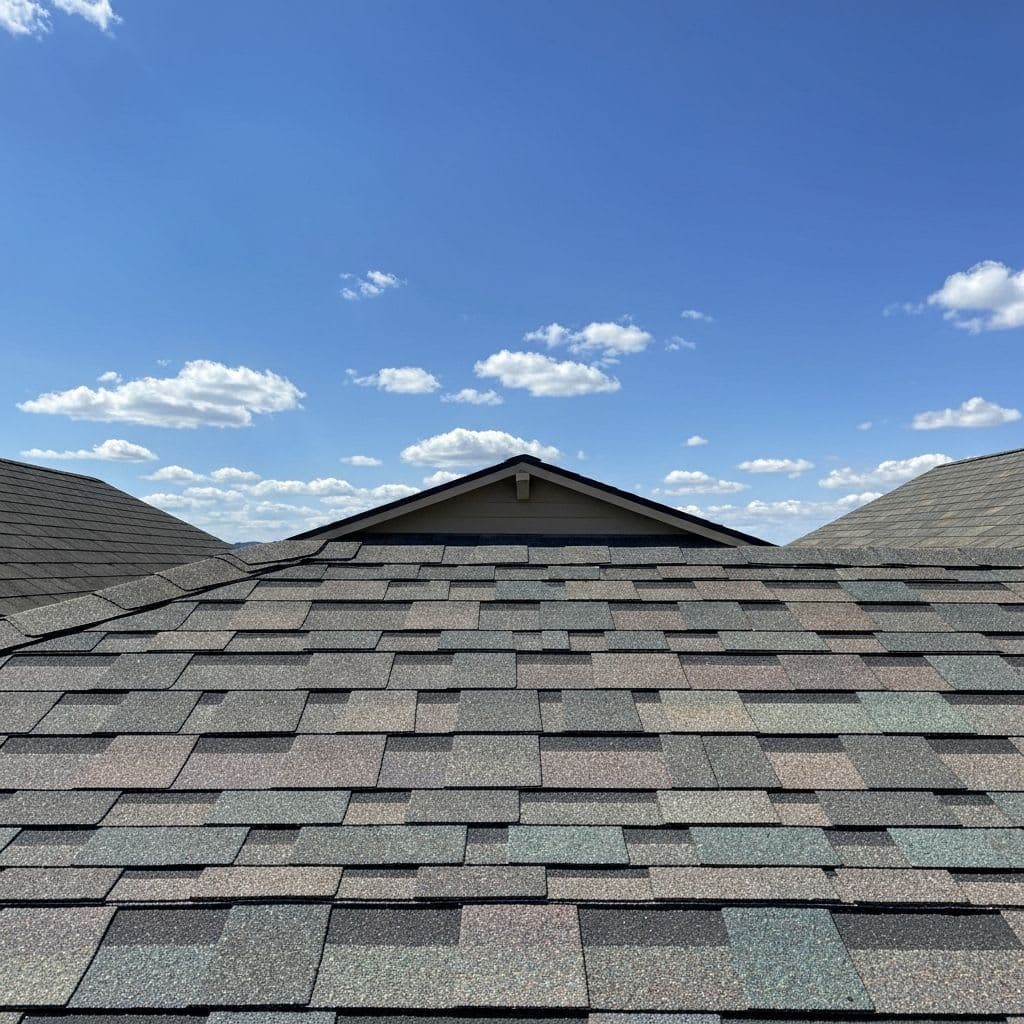
Western Loudoun, northern Fairfax, and the Montgomery County piedmont sit in a recognized hail corridor where supercell thunderstorms frequently produce 1–2 inch hail. A single hail event in this corridor can strip granules from hundreds of asphalt shingle roofs, triggering large-scale insurance-claim activity across entire HOA communities.
Navigating the Region's Regulatory Complexity
No metropolitan area in the country has more layered historic preservation oversight than Washington D.C. and its suburbs. We coordinate with local code authorities and manage historic review submissions across every relevant jurisdiction.
DC's HPRB governs exterior changes in designated historic landmarks and districts including Georgetown, Capitol Hill, Dupont Circle, Logan Circle, and Mount Pleasant. Any roof, siding, window, or façade change visible from a public right-of-way requires a Certificate of Appropriateness before work begins. We prepare and submit CA applications.
Arlington's HALRB reviews exterior changes in historic districts including Maywood, Fort Myer Heights, and Arlington Ridge. The Alexandria Board of Architectural Review governs Old Town, Parker-Gray, and other Alexandria historic districts. Both boards require pre-application consultation and material sample submissions.
Fairfax County's Historic Overlay District applies to designated properties in Clifton, Herndon, and other historic areas. Loudoun County maintains separate historic preservation review for Leesburg's Old and Historic District. In both counties, our team coordinates with Land Development Services and Building and Development respectively.
The Maryland-National Capital Park and Planning Commission (M-NCPPC) reviews historic resource impact for designated properties in Montgomery County. Silver Spring and Takoma Park both maintain local historic preservation programs with their own review processes. We coordinate with Montgomery County DPS on documentation.
The Annapolis Historic Preservation Commission oversees the largest concentration of 18th-century architecture in the country. Exterior work in the historic district requires a certificate of approval before construction can begin. Cedar shake, hand-split clapboard, and copper flashings are frequently specified materials.
Baltimore's Commission for Historical and Architectural Preservation governs exterior changes in Federal Hill, Fells Point, Bolton Hill, Mount Vernon, Union Square, and other city historic districts. Certificate-of-appropriateness submissions require detailed drawings and material specifications. We have extensive CHAP submission experience across all major Baltimore historic neighborhoods.
Serving Every Corner of the Washington D.C. Metro Area
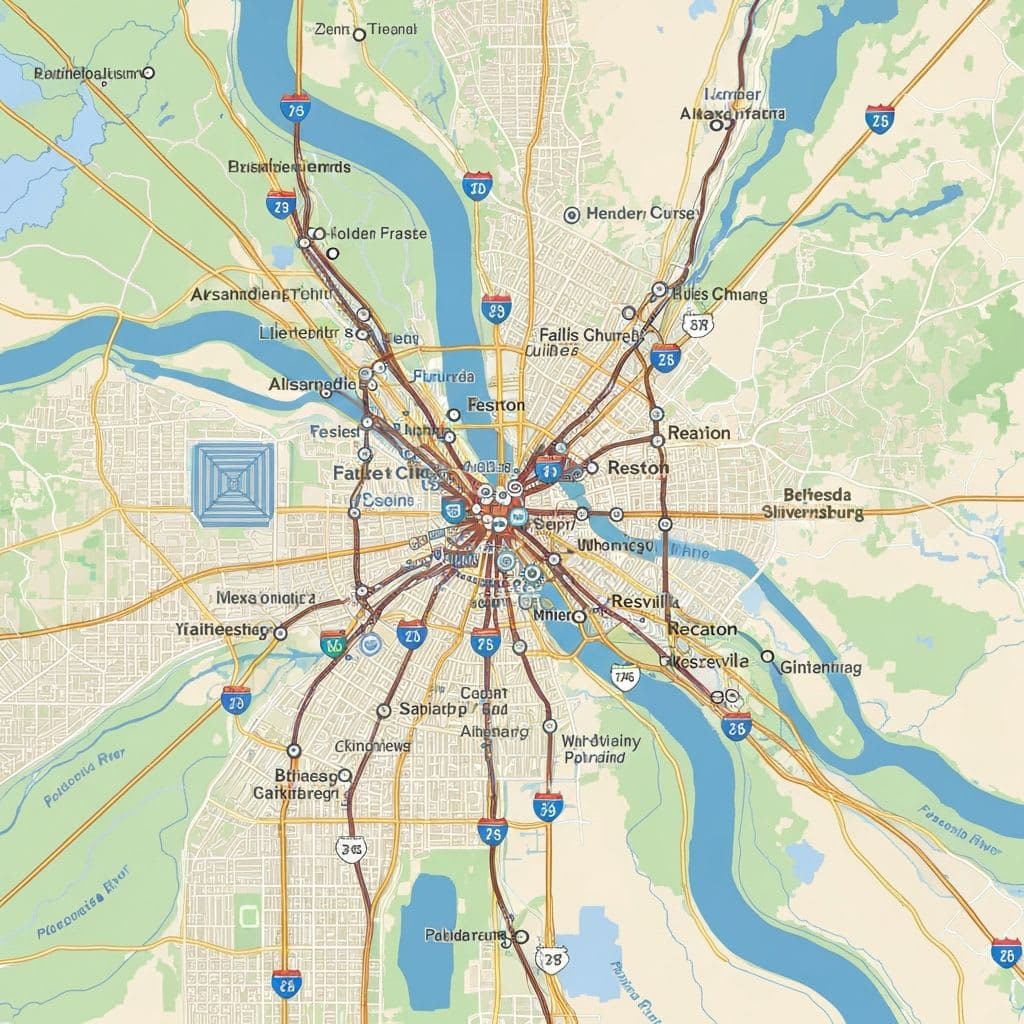
Our crews operate daily across D.C., Northern Virginia, and Maryland, proudly serving communities throughout the region.
Washington D.C.
- Northwest D.C.
- Northeast D.C.
- Southwest D.C.
- Southeast D.C.
- Capitol Hill
- Georgetown
- Dupont Circle
- Adams Morgan
Northern Virginia
- Alexandria
- Arlington
- Fairfax
- McLean
- Vienna
- Reston
- Great Falls
- Falls Church
- Loudoun County
- Prince William County
Maryland Suburbs
- Bethesda
- Silver Spring
- Rockville
- Chevy Chase
- Potomac
- Gaithersburg
- Germantown
Additional Counties
- Montgomery County
- Prince George's County
- Howard County
- Anne Arundel County
Don't see your area listed? We probably still serve it—call 1-833-324-2034 to confirm or schedule a free inspection.




Hundreds of roofing and siding projects completed across Northern Virginia and Maryland — from Old Town Alexandria historic district restorations to large-scale HOA shingle replacements in Loudoun and Fairfax counties. The DC Metro is where we built our reputation.
Project Portfolio
Representative DC Metro Projects
The following illustrate the scope and complexity of typical projects our DC Metro crews handle. Each project type is drawn from our active work in the region.

Scope: Full façade restoration on an 1800s federal townhouse. Work includes custom-milled wood siding, copper half-round gutters, period-accurate window surround repairs, and lead-paint abatement. Completed under DC HPRB Certificate of Appropriateness. Typical duration: 8–12 weeks.

Scope: Multi-building TPO roof system replacement on an occupied office campus. Work phased around tenant schedules, coordinated with property manager for parking and access. Includes drain replacement, insulation upgrade to R-30, and new scupper terminations. Typical scale: 40,000–80,000 sq ft.

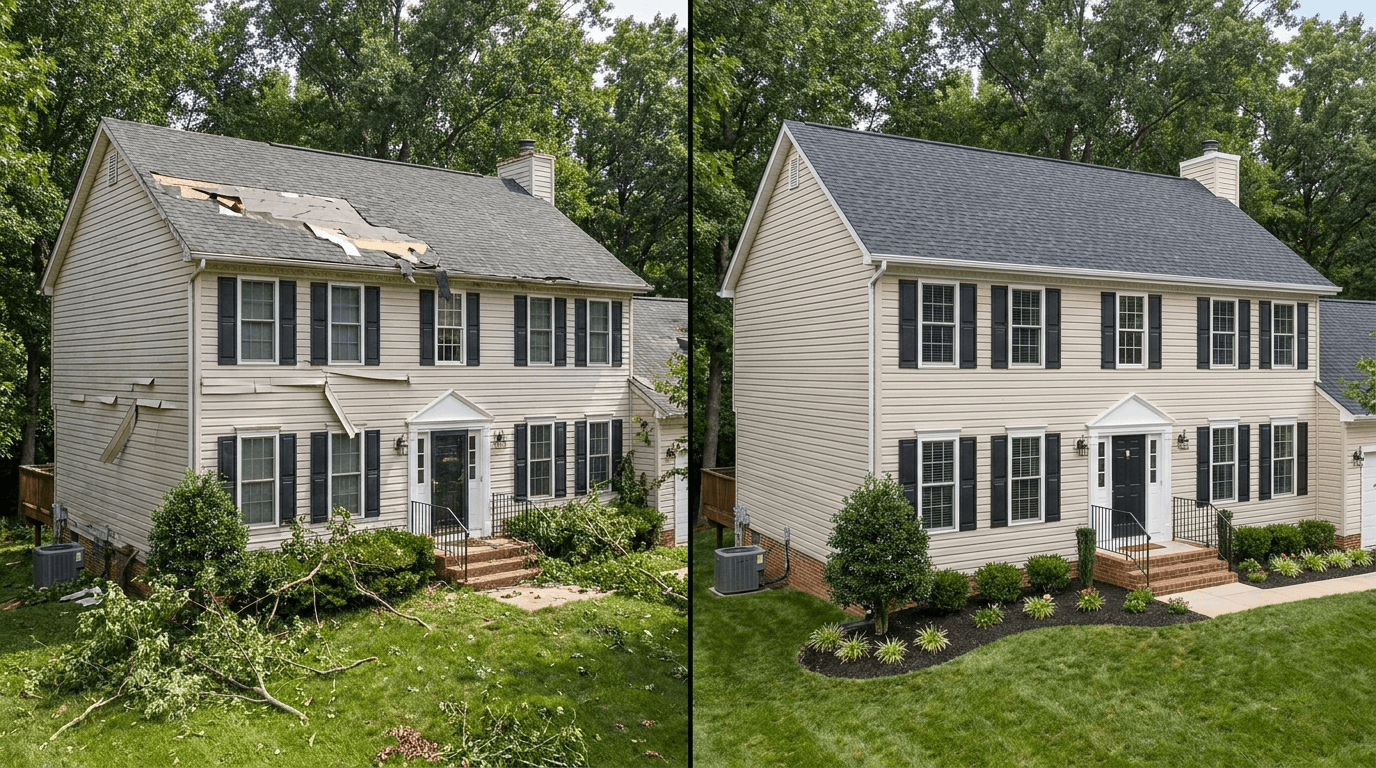
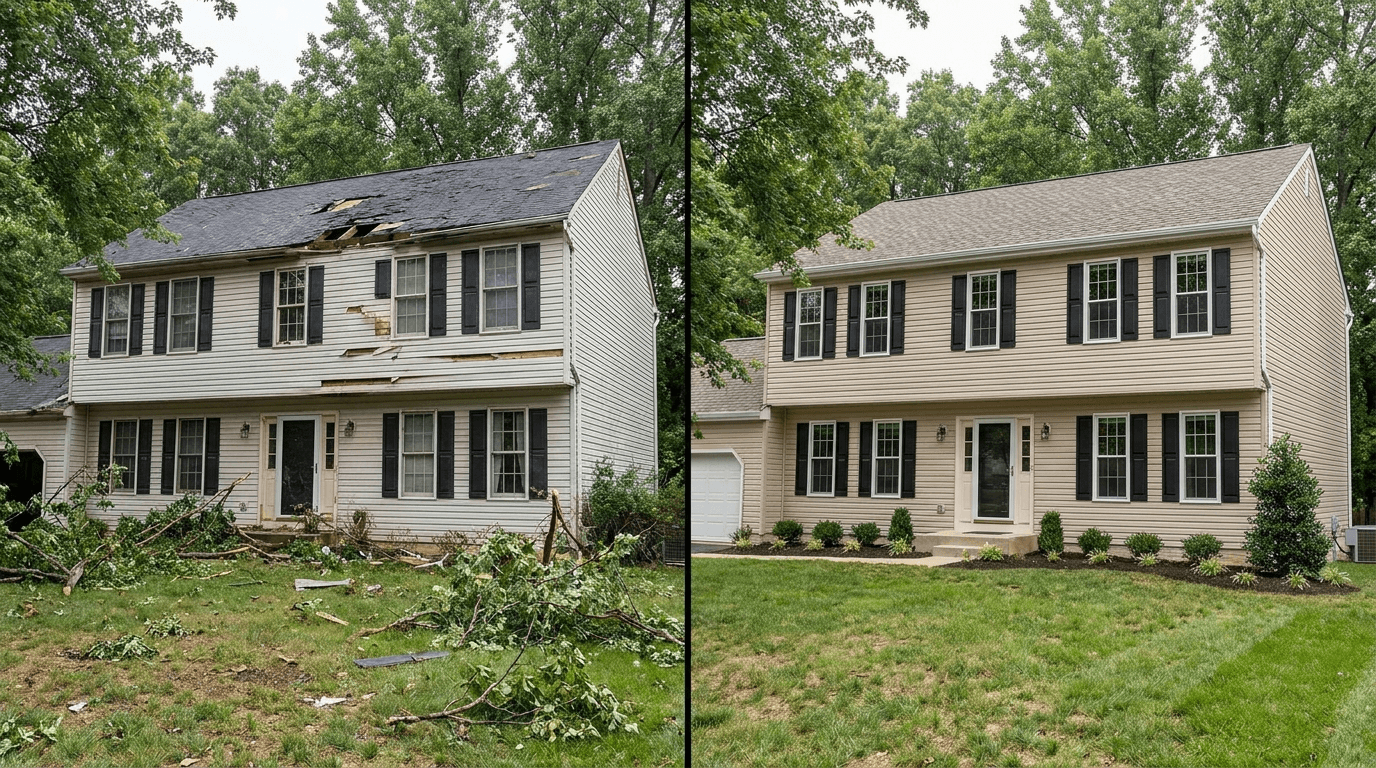
Scope: Full roof replacement and siding repair following a derecho or tropical-remnant event. Work includes emergency tarping within hours, structural inspection, insurance-adjuster coordination, and complete exterior rebuild. Insurance claims managed from first notice of loss through final payment. Typical timeline: claim to completion in 6–10 weeks.
What Our Clients Say
Hear from homeowners and businesses throughout the D.C. Metro area who have experienced the National Restoration difference.
"National Restoration turned what could have been a nightmare into a smooth experience. Their D.C. team handled every detail of our insurance claim and rebuilt our roof beautifully."
Bethesda, MD homeowner
"We trusted National Restoration with our Georgetown brownstone restoration, and they delivered craftsmanship worthy of its history. They handled the historic-review approvals and even matched 19th-century trim profiles."
Georgetown, Washington D.C. property owner
"As a property manager with multiple assets, I rely on National Restoration because they're dependable, communicative, and professional. They make my job easier."
Property manager, Arlington, VA
Contact Our D.C. Metro Team

Phone
833-324-2034Hours
Monday–Friday: 8:00 AM – 6:00 PM
24/7 Emergency Response Available
Connect With Our Regional Teams
We serve clients throughout the Mid-Atlantic region. Explore our other regional service areas.
Each local page includes service highlights, project examples, and code resources specific to your area.
Schedule Your Free Inspection Today
Don't wait until the next storm causes more damage. Contact National Restoration's D.C. Metro team for a free, no-obligation property inspection and same-day damage assessment. Available 24/7 for Emergency Response.