

Roofing and Restoration Services Across Ohio
Residential roofing and storm response across Ohio, with active projects in Cleveland, Euclid, Solon, Columbus, Sunbury, and Richmond Heights
Ohio is a growing service region for National Restoration, with residential roofing and storm response across Ohio anchored primarily in Northeast Ohio and expanding through Central Ohio into Columbus-area suburbs. Our CRM inventory includes completed projects in Cleveland, Euclid, Solon, Sunbury, and Richmond Heights, with ongoing residential shingle replacement, hail damage documentation, and storm response work across these markets.
Ohio's climate presents a demanding combination: lake-effect snow and ice loading along the Lake Erie corridor, a central hail corridor that runs through Columbus and surrounding counties, tornado alley-adjacent risk in the southwest, and freeze-thaw cycling that accelerates roofing and siding degradation across the state. Each of these factors shapes our material specifications and installation practices for Ohio projects.
We operate with the same licensed, insured crews and premium material standards in Ohio that define our work in other regions. Residential insurance claim coordination, code-compliant permitting, and phased project documentation are standard practice on every Ohio scope.
Ohio's Residential Architectural Range
Ohio's housing stock spans more than a century of residential construction, with distinct patterns by region that inform material selection, installation method, and historic review requirements.
Cleveland's inner-ring suburbs are dense with midcentury suburban ranch homes built primarily from the 1940s through 1960s. These low-pitch and medium-pitch roofs often carry original three-tab shingles well past their design life. Shaker Heights and Cleveland Heights both have active architectural review boards for properties in designated neighborhoods, and material selections may require pre-approval for color and profile.
Cleveland's older residential neighborhoods (Tremont, Ohio City, Detroit-Shoreway) and Cincinnati's German Village and Mt. Adams feature Victorian-era brick homes with steeply pitched rooflines, decorative cornices, and in some cases original slate or wood shake. Restoration in these neighborhoods often involves Cleveland Landmarks Commission or Cincinnati Historic Conservation Board review, and requires slate and period-material repair capability.
Euclid, Parma, and similar postwar suburban communities feature high concentrations of cape cod and two-story frame homes built from the late 1940s through mid-1960s. These structures often have original wood framing systems and limited attic insulation, making proper ventilation design an important component of any roofing replacement to prevent moisture accumulation under Ohio's snow loads.
Columbus-area growth communities and outer-ring suburbs like Sunbury, Worthington, and Delaware feature newer residential construction from the 1990s forward. Complex hip-and-valley rooflines, multiple penetrations, and HOA-governed communities are common. Franklin, Delaware, and Licking County permitting each have their own requirements for residential roofing replacement.
Solon and adjacent southeast Cuyahoga County communities include a mix of 1970s through 1990s colonial and split-level residential alongside newer executive homes. Solon's building department processes permits for the city; adjacent communities including Richmond Heights operate under their own municipal permitting. Hail exposure in this corridor is significant and drives demand for impact-rated products.
Cincinnati's Over-the-Rhine neighborhood contains one of the largest concentrations of Italianate architecture in the United States. The Cincinnati Historic Conservation Board governs exterior work in Over-the-Rhine and Mt. Adams, with strict material and design guidelines for roofing and facades. National Restoration has experience preparing Conservation Board submittal packages for restoration projects in these districts.
Ohio Weather Patterns and Roofing Implications
Ohio's position at the intersection of Great Lakes climate, central Plains weather systems, and Appalachian topographic influence creates a demanding multi-hazard environment for building envelopes. Each pattern has direct implications for material selection and installation standards.
Lake-Effect Snow and Ice Loading (Cleveland and Northeast Ohio)
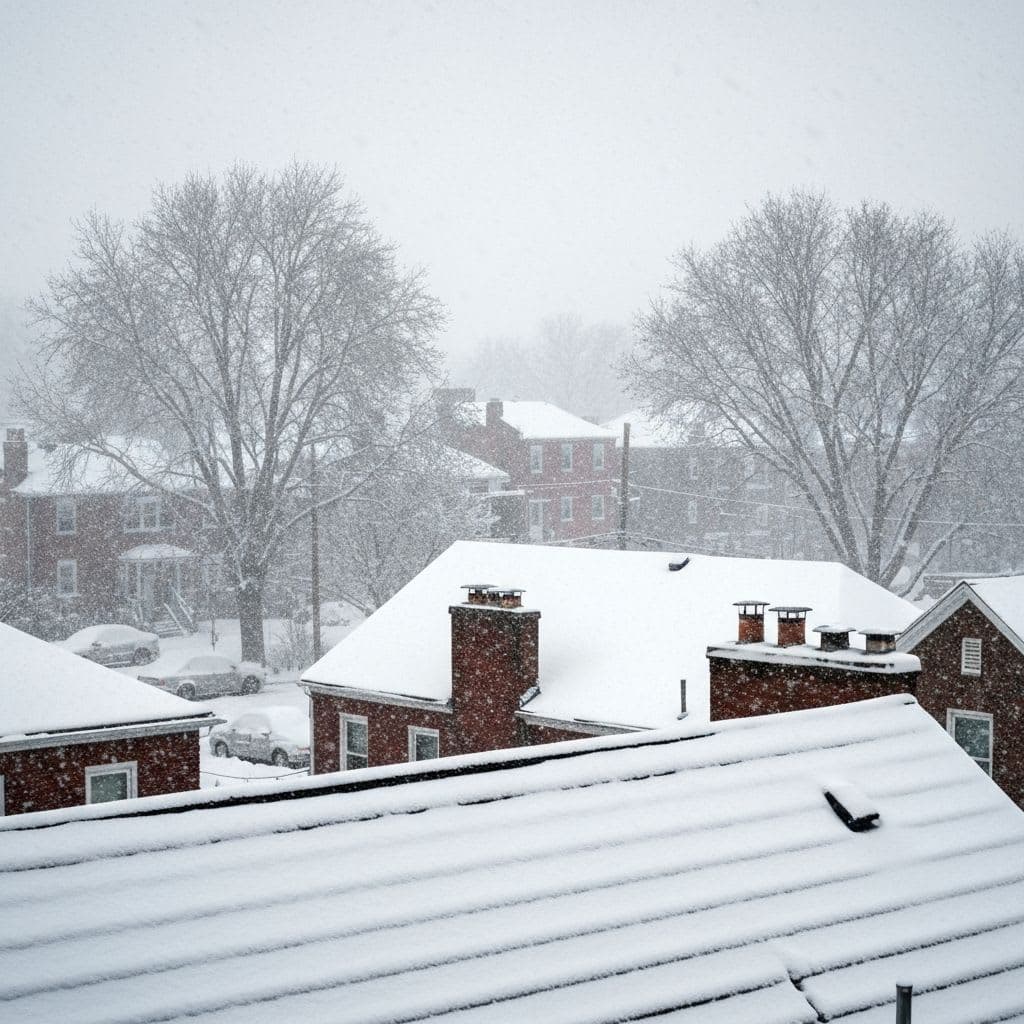
The Lake Erie corridor receives substantial lake-effect snowfall from October through March, with Cuyahoga, Lake, Geauga, and Ashtabula counties regularly seeing the highest accumulations. Heavy snow loads and ice dam formation at eaves are the primary failure modes for roofing systems in this corridor. Proper ventilation design, ice-and-water shield installation extending at least 24 inches past the interior wall plane, and sufficient attic R-value are all required to prevent ice dam formation under the Ohio Building Code's cold-climate provisions.
Hail Corridor (Central Ohio Through Columbus)
Central Ohio sits within a defined hail corridor where spring and summer convective systems produce frequent hail events. Franklin, Licking, Delaware, and Fairfield counties see recurring hail damage claims each spring. Impact-resistant shingles rated Class 3 or Class 4 per UL 2218 or FM 4473 are increasingly specified as standard on new installations in this market, both for durability and for insurance premium implications.
Tornado Alley-Adjacent Risk
Ohio sits in the eastern edge of tornado frequency zones, with southwest Ohio — particularly the Miami Valley corridor — seeing above-average tornado occurrence. High-wind fastening patterns per Ohio's adopted IRC and IBC provisions are standard practice. Starter strip and hip-and-ridge installations must meet or exceed the specified nail pattern for Ohio's wind exposure category.
Freeze-Thaw Cycle Damage
Ohio's climate produces dozens of freeze-thaw cycles annually, accelerating degradation in aging shingles, siding, and caulked penetrations. Granule loss from thermal stress is a visible indicator on asphalt shingles, while fiber cement and wood siding absorb moisture and expand at joint lines. Our Ohio inspection protocol documents freeze-thaw indicators as part of the full condition assessment.
Ohio Permitting and Historic Oversight
Ohio's permitting landscape requires coordination with both municipal building departments and preservation authorities, which vary significantly by municipality and historic district designation.
Ohio roofing and exterior permits are issued at the municipal level, with each city and township operating its own building department under the Ohio Building Code. Key jurisdictions where we regularly process permits include:
- City of Cleveland, Euclid, Solon, Richmond Heights, Shaker Heights, and Cleveland Heights in Cuyahoga County
- City of Sunbury in Delaware County; Columbus, Worthington, and Dublin in Franklin County
- City of Cincinnati, Mason, and West Chester Township in Hamilton and Warren Counties
- Township-level permits for unincorporated areas in Licking, Delaware, and Lake Counties
Several Ohio jurisdictions have active historic preservation commissions that review exterior changes to properties in designated districts:
- Ohio History Connection (statewide register) — properties listed on the Ohio Historic Preservation Register may qualify for tax credits and require compatible material treatment
- Cleveland Landmarks Commission — governs exterior work on designated Cleveland landmarks and in Cleveland historic districts including Ohio City, Tremont, and Detroit-Shoreway
- Cincinnati Historic Conservation Board — oversees Over-the-Rhine, Mt. Adams, and other Cincinnati historic conservation districts
- Shaker Heights Landmarks Commission — reviews exterior alterations in the Shaker Heights Historic District, one of Ohio's most intact planned suburban communities
Ohio Sub-Markets We Serve
Our Ohio operations are centered in Northeast Ohio with active expansion into Central Ohio. Southwest Ohio representation continues to grow.
Cleveland proper and the Cuyahoga County inner ring represent our most active Ohio market. Completed projects in Euclid, Solon, and Richmond Heights anchor this coverage area alongside ongoing residential shingle work throughout the county.
Cleveland • Euclid • Solon • Richmond Heights
Shaker Heights • Cleveland Heights • Lakewood
Parma • Strongsville • Independence
Cuyahoga County • Lake County
Central Ohio coverage includes the Columbus metro and extending north to Sunbury and Delaware County, where documented projects in our inventory confirm active presence. The hail corridor through this region drives steady demand for impact-rated roofing replacements.
Columbus • Sunbury • Worthington • Dublin
Westerville • Gahanna • New Albany
Grove City • Hilliard • Delaware
Franklin County • Delaware County • Licking County
Cincinnati and the northern Hamilton County and Warren County suburbs represent a growing presence. Storm damage response and residential roofing replacement anchor our scope in this market, with historic district work available in Over-the-Rhine and Mt. Adams.
Cincinnati • Mason • West Chester
Hamilton • Fairfield • Loveland
Blue Ash • Anderson Township
Hamilton County • Butler County • Warren County

Cleveland

Columbus

Cincinnati

Our Crews
Ohio Service Priorities
Our Ohio work is driven by three high-demand categories: storm damage response, residential shingle replacement, and insurance claim coordination.
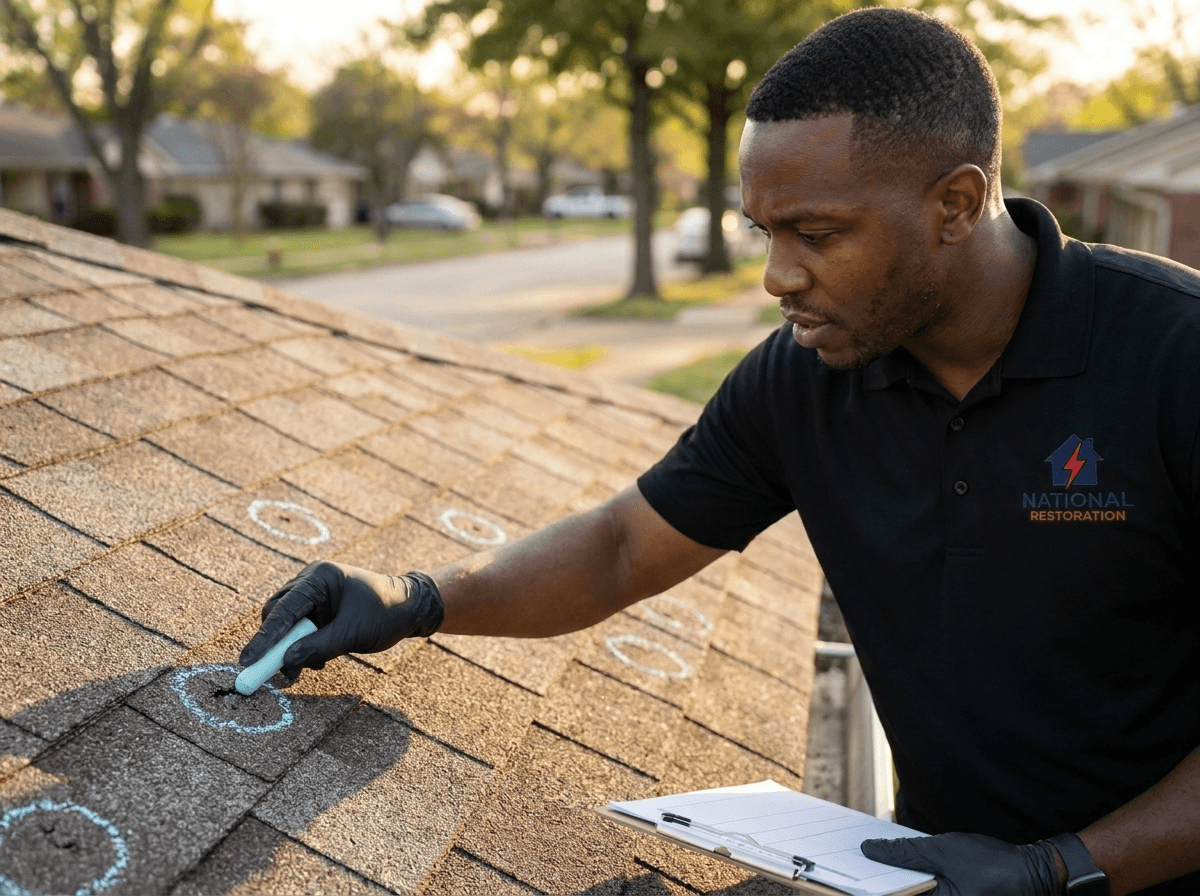
Northeast and central Ohio see recurring hail events each spring and summer. After a significant hail event, our inspection team mobilizes to assess granule loss, bruising, and impact marks on roofing, siding, and gutters. We produce documentation suitable for insurance claim submission and coordinate directly with adjusters to support fair scope-of-loss determinations.
- Post-event rapid inspection and photo documentation
- Emergency tarping and temporary protection
- Adjuster accompaniment and scope review
- Full replacement execution once claim is approved
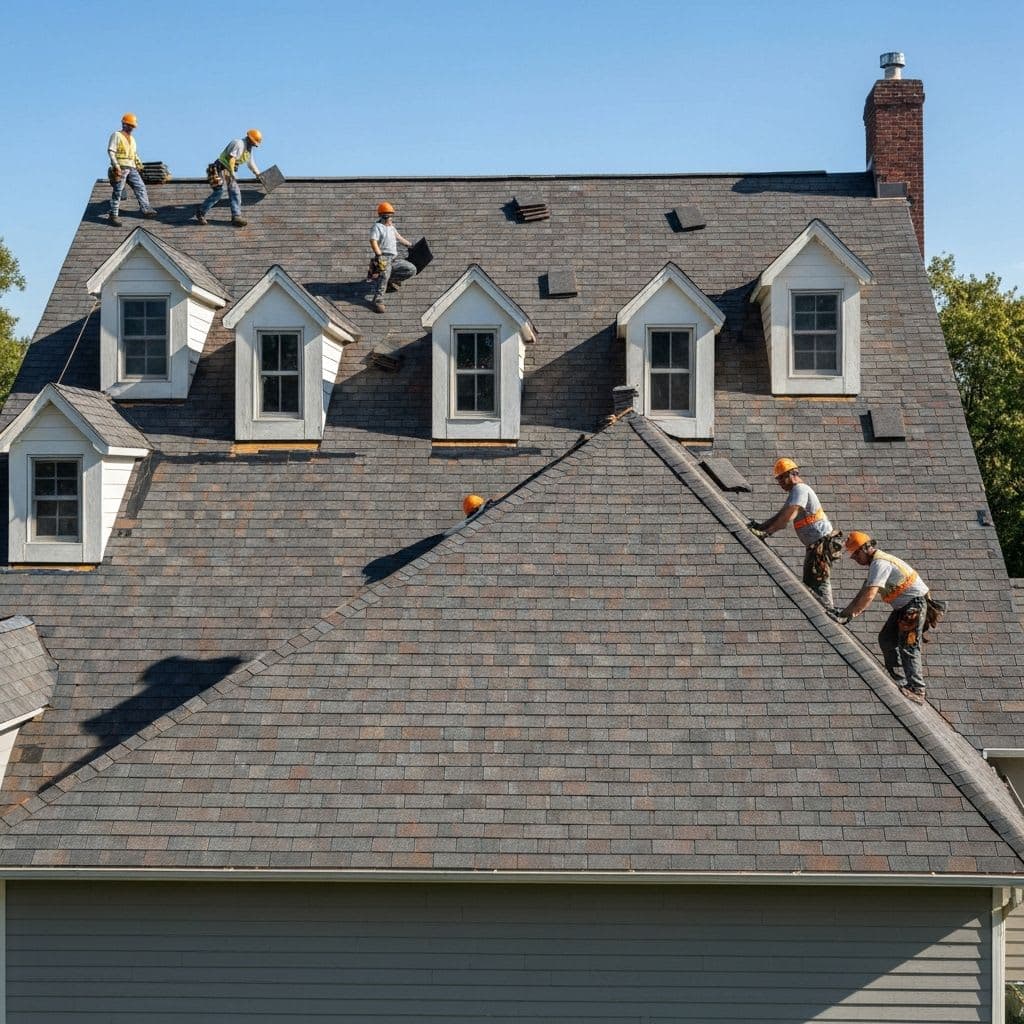
Residential shingle replacement is the core of our Ohio production. We install asphalt architectural shingles with proper underlayment, ice-and-water shield at eaves and valleys, and ventilation systems sized to Ohio Building Code requirements. For projects in the hail corridor, we routinely specify Class 4 impact-rated products.
- Architectural and Class 4 impact-rated shingles
- Ice-and-water shield per OBC cold-climate requirements
- Ventilation system assessment and correction
- Metal roofing, TPO, and EPDM for commercial and flat-roof applications
Ohio property owners navigating storm damage claims benefit from having a contractor with established insurance claim process experience. Our project managers document damage using professional photo documentation and Xactimate-compatible estimates, accompany adjusters during site inspections, and manage supplement requests when initial estimates are incomplete.
- Professional damage documentation and estimate preparation
- Adjuster coordination and scope alignment
- Supplement management for incomplete initial approvals
- Full project execution from permit to final inspection
Additional Services Across Ohio
Vinyl, fiber cement, and engineered wood siding replacement and repair
Energy-efficient window and door replacement rated for Ohio's climate zone
Seamless gutters, downspout extensions, and underground drainage systems
Emergency response, extraction, structural drying, and full rebuilds
Request a Free Inspection in Ohio
Whether you've experienced storm damage, roof leaks, or aging exteriors, our Ohio teams are ready to help. Schedule a free inspection and estimate today. Reach us at 833-324-2034 or inquiries@natrestoration.com.