
Historic Restoration
Preservation-grade work on landmark, historic district, and registry-eligible properties
Historic buildings are different. They carry the character and construction methods of their era, and they answer to a different regulatory framework than modern work. National Restoration specializes in sensitive restoration of historic homes, commercial buildings, and institutional properties that are individually landmarked, located in local historic districts, listed on the National Register, or eligible for listing.
Our approach follows the Secretary of the Interior's Standards for the Treatment of Historic Properties: preserve what can be preserved, repair what can be repaired, and replace in kind when replacement is unavoidable. We coordinate with local landmark commissions and State Historic Preservation Offices, we source period-appropriate materials, and we detail every feature with respect for the building's original craft.
Why Owners Trust Us With Historic Properties
Preservation is a discipline. Here is the expertise we bring to every historic project.
Our crews and project managers work to the Secretary of the Interior's Standards. Preservation, rehabilitation, restoration, and reconstruction treatments applied to the right scopes.
We prepare Certificate of Appropriateness (CoA) submittals, attend Historic Preservation Review Board (HPRB) meetings, and respond to staff-level design reviews. Our service regions include DC's HPRB, Old Town Alexandria's Board of Architectural Review, Maryland's MHT, and local commissions in Atlanta and Ohio historic districts.
Carpenters who mill and install period-correct profiles, masons who know lime mortars, and finish trades who understand shellac, milk paint, and linseed putty. Real craft, not drywall-era shortcuts.
Wood windows, slate roofing, cedar shingles, true-dimensional lumber, historic-profile siding, and custom trim milled from photos or salvaged samples. Material sourcing is part of our service.
Federal 20% Historic Rehabilitation Tax Credit and state historic tax credits can transform the finances of a qualifying project. We work with consultants to keep scopes tax-credit-eligible.
Historic does not mean drafty. We integrate modern air sealing, insulation, and waterproofing behind preserved finishes so historic buildings perform well for modern occupants.
Historic Scopes We Execute
Exterior, interior, and full-building restoration on historic homes and commercial structures.
Historic slate roofs, clay tile, and standing seam and terne-coated metal. Repair, selective replacement, and full reroofing with salvaged or period-appropriate material.
- Slate hooks and copper nail fastening
- Lead-coated copper and terne flashings
- Custom-fabricated snow guards and cresting
Brick repointing with lime-based mortars matched to original composition, brownstone consolidation, terra-cotta repair, and Dutchman stone patches.
- Mortar analysis and color/texture matching
- Brownstone and sandstone consolidation
- Masonry cleaning with preservation-safe methods
Repair and restoration of historic wood windows, not wholesale replacement with vinyl. Weatherization to modern performance while preserving original sash, glass, and hardware.
- Sash restoration with epoxy consolidation
- Linseed oil putty and wavy glass preservation
- Interior storm windows for thermal performance
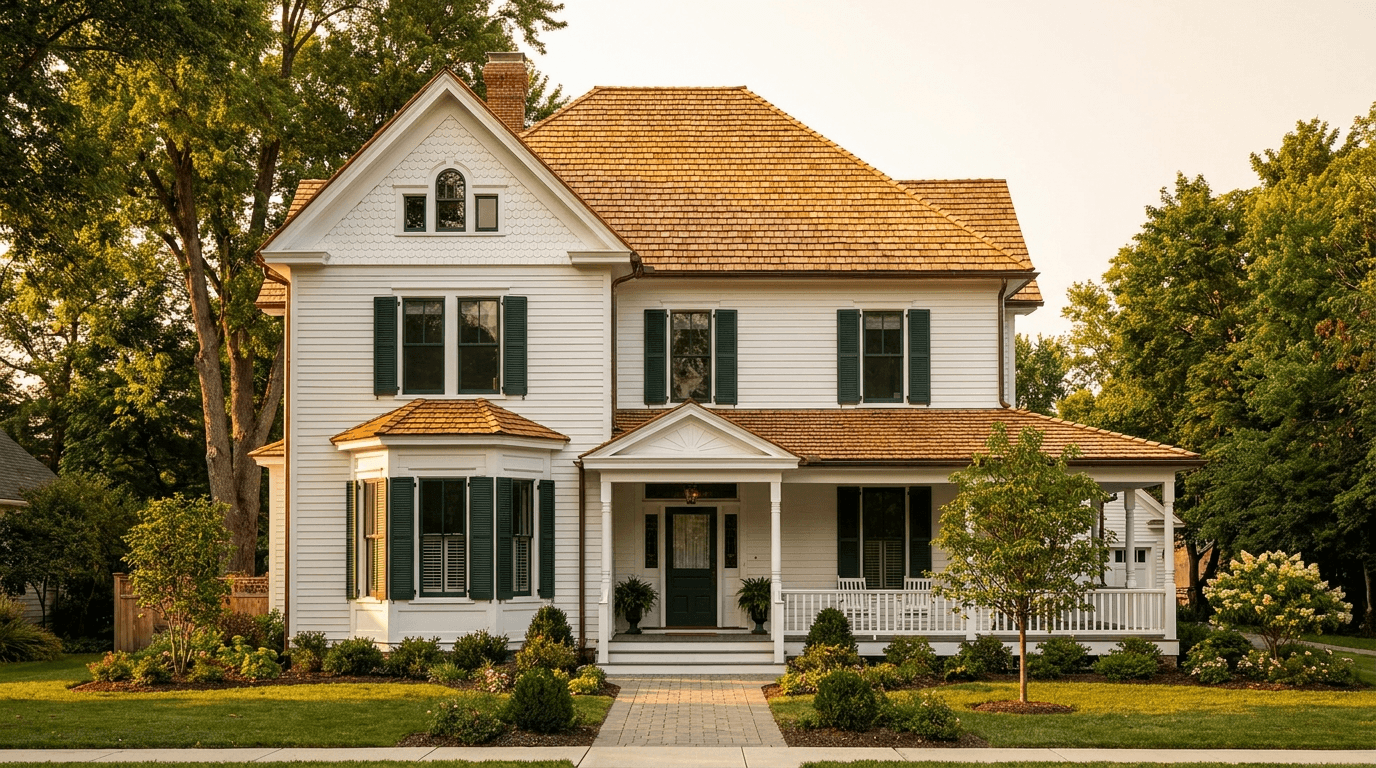
Clapboard, drop siding, shingle siding, and elaborate Victorian and Queen Anne trim. Porches with original column profiles, turned balusters, and decorative brackets.
- Custom-milled siding to match original profiles
- Wood porch column and baluster replication
- Decorative bracket and scrollwork restoration
Preservation-Grade Project Delivery
A disciplined process that honors the building and the regulators.
We document character-defining features, existing-conditions photography, and any prior approved or disapproved work. The significance of each feature shapes the treatment plan.
Certificate of Appropriateness, design review, or staff-level approval as required. Material samples, mock-ups, and narrative justifications prepared and submitted.
Salvage warehouses, custom millwork shops, specialty roofing suppliers, and period-appropriate hardware vendors. Lead times addressed early so schedule holds.
Protection of surviving fabric, careful removal of non-historic additions, and in-kind repair of the original material wherever possible. Documentation photos at every stage.
Final commission sign-off, tax credit certification packages if applicable, and a preservation record turned over to the owner for property history files.
Historic Tax Credits Done Right
The federal Historic Rehabilitation Tax Credit provides a 20% credit on qualified rehabilitation expenditures for income-producing historic buildings. Many states layer an additional credit on top. On the right project, the combined impact is transformative.
We coordinate with tax credit consultants and the State Historic Preservation Office through the Part 1, Part 2, and Part 3 submittal process. Scopes are designed to remain eligible, photo documentation is comprehensive, and the final certification package is delivered complete.
Discuss a Tax Credit ProjectCraftsmanship Guarantee
Period-appropriate does not mean old. Our work is warrantied and documented.
A 5-year workmanship warranty on historic restoration work, with longer terms available with system upgrades. Return visits for warranty items are expected and honored, not disputed.
Relationships with preservation architects, historic consultants, conservators, and craft specialty trades. When a project needs outside expertise, we bring it in.
Historic Overlay Districts in Our Service Regions
Each of our service regions has a distinct regulatory landscape for historic properties. Understanding the applicable review authority is the first step in any preservation project.
The DC Metro region has one of the densest concentrations of historic overlay districts in the country. Each jurisdiction has its own review authority and CoA process.
- DC Historic Preservation Review Board (HPRB): Georgetown, Capitol Hill, Dupont Circle, and more
- Old Town Alexandria Board of Architectural Review: one of Virginia's oldest CoA processes
- Maryland Historical Trust (MHT): coordination for state and National Register properties
- Annapolis Historic District and downtown Baltimore: city-level review with state overlay
- Fairfax and Loudoun county local historic districts: staff-level approvals for routine scope
Atlanta's intown neighborhoods include some of Georgia's most significant historic residential fabric. City of Atlanta Landmark and Historic District designations require design review before exterior work.
- Inman Park: one of Atlanta's first planned suburbs, National Register listed
- Grant Park: Victorian-era housing stock with city landmark review
- Virginia-Highland and Druid Hills: Olmsted-designed streetscapes, design review applies
- Georgia State Historic Preservation Office (HPD) for National Register nominations and tax credit projects
Ohio has a rich historic built environment spanning 19th-century industrial districts, Victorian residential neighborhoods, and early 20th-century institutional fabric across its major cities.
- Cincinnati's Over-the-Rhine: one of the largest intact 19th-century urban historic districts in the U.S.
- Shaker Heights: planned garden suburb with active architectural board review
- Columbus Short North and German Village: local landmark designations with CoA requirements
- Ohio History Connection (State Historic Preservation Office) for NR-listed and tax credit projects
Sourcing Period-Appropriate Materials
The right material is not always available off a distributor's shelf. Sourcing is a core part of our historic restoration capability.
Vermont and Virginia slate quarries still produce roofing slate in the traditional grades (S1 soft, hard) and colors. We source from established quarry suppliers to match existing roof color, texture, and thickness on repair and replacement projects.
Hand-split cedar shakes and sawn cedar shingles for historic roofs and siding. Grade selection follows original construction documentation or visual matching. Preservative treatments available where commissions permit.
Spanish S-tile, French interlocking, and flat pan-and-cover styles. Historic clay tile manufacturers can produce custom runs to match discontinued profiles where full reroof is required on a landmarked property.
Copper standing-seam and terne-coated steel for historic flat and low-slope roofing systems. Lead-coated copper flashings fabricated to match original details at dormers, chimneys, and valleys.
Repointing with lime-based mortars weaker than the brick — the correct approach for pre-1920s masonry. Mortar analysis from existing joint samples informs color, texture, and composition of the repointing mix.
True-dimension lumber, custom-milled siding profiles, turned porch elements, and period window hardware sourced from specialty suppliers. Historic glass (wavy, cylinder-drawn) available for window restoration where original glazing cannot be preserved.
Restore the Past With Confidence
Landmark, district, National Register, or simply a cherished old building. Our historic team handles the regulation, the research, and the craft.