
Proven rubber membrane systems with a six-decade track record
EPDM, short for ethylene propylene diene monomer, is a synthetic rubber membrane that has been protecting commercial roofs since the 1960s. No other single-ply system has been field-tested as thoroughly. At National Restoration, we install EPDM on warehouses, schools, office buildings, apartment complexes, and institutional facilities where owners want a roof with a proven history.
The rubber formula has remained largely unchanged for decades because it did not need to. EPDM shrugs off UV, ozone, and extreme temperature swings better than almost anything else on a commercial roof. Original 1970s installations are still in service today, and modern formulations routinely deliver 30-plus years before replacement.
EPDM remains one of the most specified commercial membranes on the market because it simply works, year after year, decade after decade.
Commercial-grade EPDM has been installed since 1967. Roofs put down in the 1970s and 80s are still performing today. No other single-ply membrane has anywhere near the same real-world service record.
EPDM flexes through temperature swings from -40 to 300 degrees Fahrenheit without hardening, cracking, or losing elasticity. This makes it an ideal choice for northern climates with severe freeze-thaw cycles.
The carbon black that gives EPDM its distinctive color also makes it highly resistant to ultraviolet light and atmospheric ozone, the two leading causes of membrane deterioration.
Lower initial material cost than PVC, competitive with TPO, and a service life at the upper end of the single-ply category. EPDM's cost per year of service is among the lowest in commercial roofing.
EPDM is available in sheets up to 50 feet wide and 200 feet long, dramatically reducing the number of seams on a finished roof. Fewer seams mean fewer potential leak points over the life of the system.
Every aging EPDM roof can be cleaned, patched, and fluid-coated to add years of service. That serviceability is one reason building owners keep specifying EPDM for new construction and re-roofs.
EPDM can be installed three ways, each with advantages depending on building design and budget.
Bonding adhesive is applied to both the insulation and the back of the membrane, then rolled out and mated for a permanent chemical bond. The gold standard for appearance and wind uplift.
Membrane sheets are fastened to the deck with batten bars or plates along the seam lines. Faster to install and typically less expensive than a fully adhered system.
Loose-laid membrane is held in place by 10-12 pounds per square foot of smooth river stone ballast. Simple, proven, and easily serviceable, often the most economical new installation.
We specify EPDM thickness and formulation based on warranty, foot traffic, and building requirements.
Our teams have deep experience installing single-ply systems to the exact specifications required for total system warranty coverage.
On re-roofs, we remove the existing system down to the structural deck, inspect for deterioration, and repair or replace any damaged substrate. Moisture surveys identify hidden wet insulation on larger roofs.
Polyiso insulation is installed to meet current code R-values, followed by a dense-fiber cover board that protects the membrane from substrate irregularities and improves puncture resistance.
EPDM sheets are rolled out, positioned, and allowed to relax before adhesion or fastening to eliminate the memory from shipping rolls. This small step prevents wrinkling and stress at seams.
Seam areas are cleaned with splice primer, then bonded with factory-applied seam tape. Modern EPDM seam tape delivers peel strength that exceeds the membrane itself when installed correctly.
Uncured EPDM flashing is formed around pipes, curbs, and corners. Termination bars seal every wall transition, and pitch pockets or pre-manufactured boots handle complex penetrations.
Every seam is probed, every flashing inspected, and the manufacturer's technical representative performs a final walk before warranty registration. Any punch-list items are corrected before we leave the job.
One of EPDM's strongest advantages is how easily it can be maintained and even restored. An aging EPDM roof is almost always a candidate for a service-life extension rather than full replacement.
Scheduled Inspections
Twice-yearly inspections document seam condition, flashings, drains, and terminations with photographic evidence for your facility records
Seam & Patch Repair
Small seam failures and isolated punctures are repaired with cleaner, primer, and factory-tape patches that restore the roof to full waterproof integrity
Fluid-Applied Restoration
Older EPDM can be cleaned and top-coated with a silicone or acrylic restoration coating, meaningfully extending service life and improving reflectivity for a fraction of replacement cost
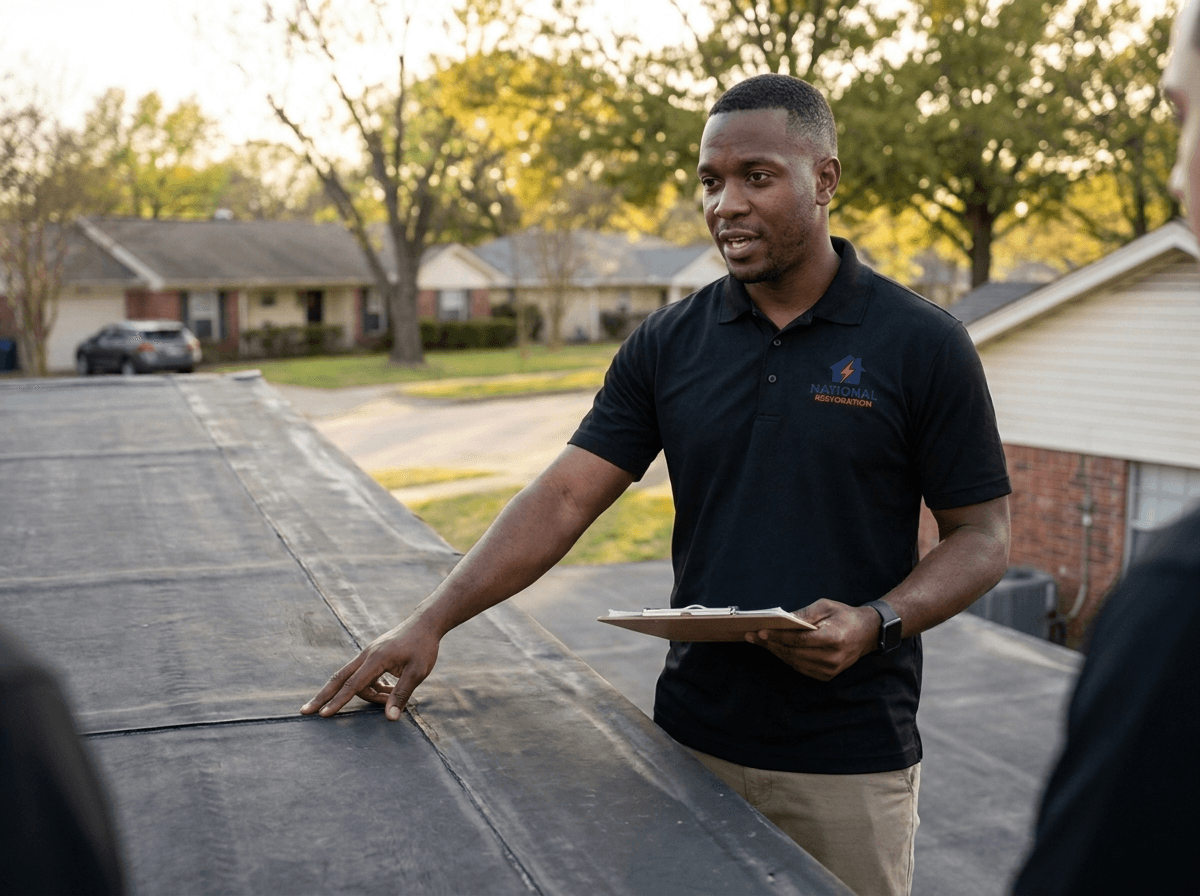
From tight budget re-roofs to long-life installations, we engineer and build EPDM systems that perform for decades. Schedule your free rooftop assessment today.