
Multi-ply SBS and APP membrane systems engineered for flat and low-slope commercial roofs
Modified bitumen combines the proven performance of traditional built-up roofing with the convenience of factory-manufactured rolled sheets. The asphalt is modified with either rubber polymers (SBS) for cold-climate flexibility, or plastic polymers (APP) for heat-welded durability. At National Restoration Corporation, we install modified bitumen systems on commercial, industrial, and institutional roofs where redundancy and puncture resistance are the top priorities.
Unlike single-ply membranes, modified bitumen is installed in multiple layers, usually a base sheet, a middle ply, and a granulated cap sheet. The result is a thick, redundant roof assembly that can absorb impacts, handle heavy rooftop foot traffic, and continue performing even if one layer is compromised. That layered engineering is why modified bitumen is still specified for schools, grocery stores, and manufacturing facilities where a membrane failure is not an acceptable risk.
Modified bitumen bridges the gap between old-school built-up roofs and modern single-ply systems, and it still wins on roofs where toughness is the first requirement.
With two to four plies, a puncture or failure in one layer does not translate to a leak in the building below. The redundancy built into modified bitumen systems is unmatched by any single-ply membrane.
The thickness and density of modified bitumen stand up to foot traffic, dropped tools, and dragging equipment better than thin membranes. Ideal for roofs with HVAC service, satellite installations, or rooftop access.
Granulated cap sheets are available with highly reflective white or light-colored surfacing that qualifies for ENERGY STAR and Cool Roof Rating Council listings, reducing cooling loads on conditioned buildings.
Modified bitumen can be installed by torch, hot asphalt, cold adhesive, or self-adhering peel-and-stick. That flexibility lets us match the attachment method to the building's occupancy, odor sensitivity, and fire-code restrictions.
Modern SBS and APP modified bitumen systems routinely deliver solid multi-decade service, with well-maintained installations continuing well beyond initial expectations. Extended warranty coverage is available on most premium specifications.
Modified bitumen bonds beautifully to curbs, parapets, and penetrations. Detail work shaped on site with a torch or hot mop remains one of the most reliable flashing techniques in commercial roofing.
We install SBS and APP modified bitumen using the attachment method that best fits the building's requirements and the climate.
Styrene-butadiene-styrene polymers create a rubberized asphalt that stays flexible in cold weather. SBS is the most common modifier in North America and a natural fit for northern climates.
Atactic polypropylene polymers create a plasticized asphalt with outstanding UV and heat resistance. APP sheets are torch-applied and well suited to hot, sunny climates.
The traditional heat-welded method. A propane torch melts the backing as the sheet is rolled, forming a complete chemical bond to the substrate or underlying ply.
Cold-process adhesives and self-adhering peel-and-stick membranes eliminate open flame, making these methods the right choice for occupied buildings, combustible decks, and fire-restricted jurisdictions.
Every modified bitumen roof we install follows manufacturer specifications and adheres to the National Roofing Contractors Association installation guidelines.
The existing roof is torn off or prepared for re-cover, deteriorated decking is replaced, and a clean, dry substrate is established for the new assembly.
Mechanically attached or adhered polyiso insulation brings the assembly to current code R-values, topped with a fire-rated cover board that serves as the substrate for the base ply.
The base ply is mechanically attached or adhered, providing the foundation for the modified bitumen sheets above. Base ply quality is critical to long-term performance.
A smooth-surfaced modified bitumen ply is torched, cold-applied, or self-adhered over the base, adding the second layer of redundancy. Seams are lapped and fully bonded.
The finished surface is a ceramic-granule-coated cap sheet that protects the assembly from UV, provides traction for foot traffic, and delivers the visual finish for the roof.
Bitumen flashings are fabricated for every parapet, curb, and penetration, metal counter-flashings are installed where specified, and the completed roof is walked and probed before the warranty is issued.
Modified bitumen is one of the most serviceable commercial roof systems available. Small issues detected early are usually simple patch repairs, and the layered construction gives us the redundancy to stop problems before they reach the deck.
Semi-Annual Inspections
Spring and fall walk-throughs document seam integrity, granule loss, flashing condition, and drain function with a detailed photo report
Seam & Flashing Repairs
Small lifts at seams and flashings are re-torched or re-adhered with matching material, restoring a fully waterproof detail
Restoration Coatings
Aging modified bitumen can be cleaned and top-coated with silicone or aluminum restoration coatings that add 10+ years of life and improve reflectivity
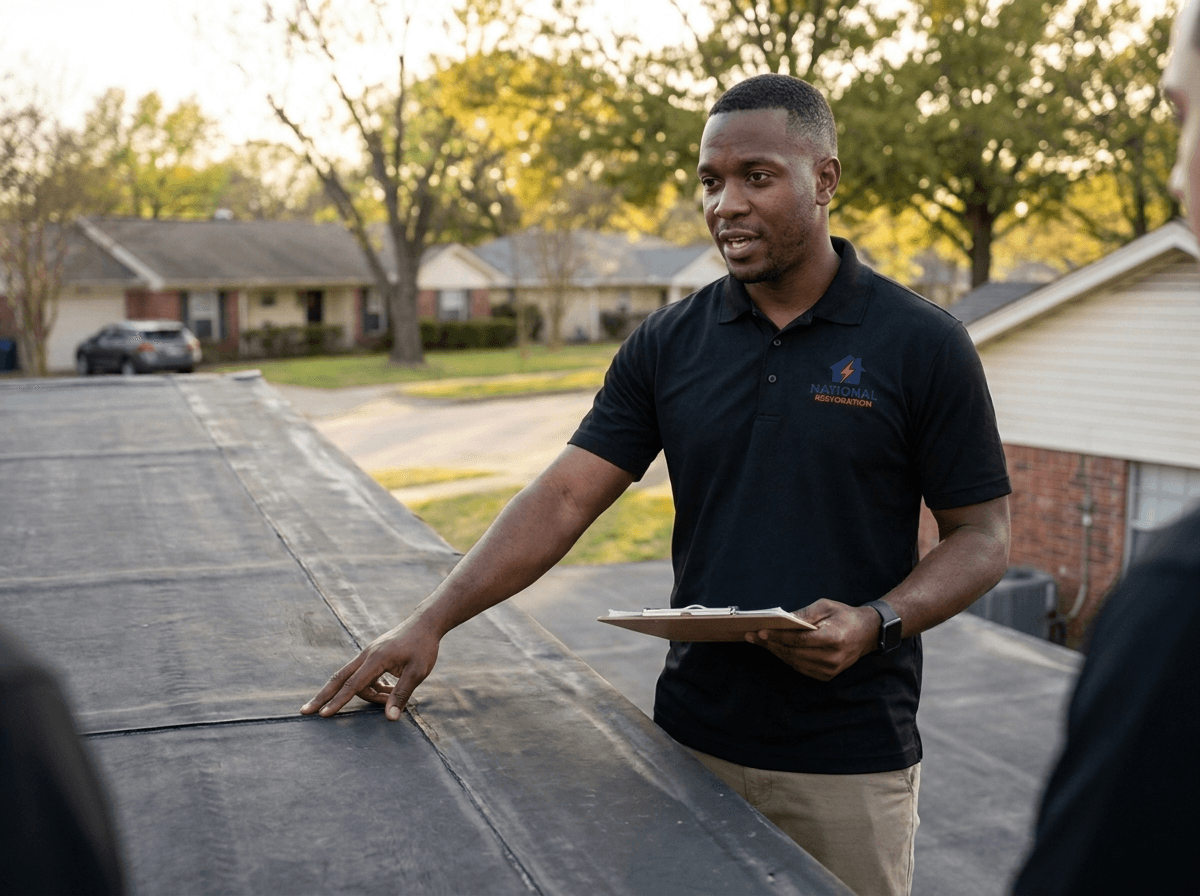
From torch-down SBS on a warehouse to cold-applied re-roofs on an occupied school, we design modified bitumen systems around the demands of your building. Schedule your free rooftop evaluation.