
Hand-quarried natural stone that protects homes for over a century
Slate is the finest roofing material money can buy. Quarried from metamorphic stone formed over hundreds of millions of years, each slate is split by hand and laid across the roof deck to create a covering that is essentially permanent. At National Restoration, we specialize in authentic slate installations on luxury homes, historic buildings, and institutional properties where nothing less will do.
A properly installed slate roof will outlive the building it protects. Many of the slate roofs on churches and courthouses in the Northeast are the original slates laid in the 1800s, still shedding water as they did the day they were installed. This is roofing as architectural heirloom.
No other roofing material combines the longevity, beauty, and sheer substance of natural stone.
Top-grade hard slate from Vermont, New York, and Pennsylvania quarries is rated for exceptional multi-generational service. Even medium-grade slate outlasts three or four generations of asphalt roofs.
Slate is literally stone. It cannot burn, will not melt, and carries a Class A fire rating. For wildfire regions and historic districts, slate provides the highest passive fire protection available.
Slate is the roofing of cathedrals, ivy-league campuses, and historic estates. No synthetic substitute replicates the subtle color variation, thickness, and texture of a hand-laid natural slate roof.
A slate roof eliminates the need for five to eight replacement cycles with synthetic materials. Every slate is 100% natural stone, completely recyclable, and requires minimal processing energy.
Slate is one of the few building components that enhances property value rather than depreciating. Appraisers in established neighborhoods specifically note slate as a premium feature that distinguishes a home.
Slate is impervious to water absorption, insects, rot, UV degradation, and freeze-thaw cycles. The only maintenance most slate roofs need is occasional flashing work around valleys and chimneys.
Slate varies dramatically by quarry of origin. The right choice depends on climate, architecture, and budget.
The most prestigious slate in North America, quarried from the Taconic Range. Known for tight grain, minimal water absorption, and consistent color.
Historically one of the largest slate-producing regions in the country. Pennsylvania black slate roofed much of the Northeast in the late 1800s and early 1900s.
Spanish and Welsh slates have roofed European buildings for centuries. They offer excellent consistency and very competitive pricing for high-quality material.
For landmark projects, we install graduated slate installations where tile thickness and size change from eave to ridge, creating dramatic depth and shadow.
Slate work is specialty work. Our slate installers train for years before they set a course on a finished home, and every project follows the National Slate Association standards.
Slate is the heaviest common roofing material at 800-1,500 lbs per square. We evaluate rafter size, spacing, and deck capacity, and engineer any reinforcement required to safely support a century of stone overhead.
Solid sheathing is installed if needed, followed by 30# felt or high-performance synthetic underlayment. Ice and water shield is applied at eaves, valleys, and every penetration.
Because the slate will outlast every other material on the roof, we flash with heavy-gauge copper (standard minimum weight per IRC R905.6) at valleys, sidewalls, chimneys, and all penetrations. Galvanized steel flashing is never appropriate under a slate roof.
Each pallet of slate is inspected and sorted by thickness, color, and minor variation. Our crews lay out courses so color and thickness transition naturally across the roof rather than showing banding or hot spots.
Every slate is hand-nailed with copper or stainless slating nails driven to precise depth per IRC R905.6. The slates must "hang" on the nails without being crushed — a detail that separates a short-lived installation from one that endures for generations.
Copper ridge and hip caps are formed on site. Snow guards are installed where needed to prevent avalanching, protecting landscaping, walkways, and lower roof sections for decades of winters.
Slate's color comes from minerals locked in the stone over geologic time. No two slate roofs look exactly alike, and the best designs celebrate that variation.
Classic Color Range
Unfading black, blue-black, gray, green, purple, and red Vermont, along with weathering gray-green that mellows gracefully over decades
Multi-Color Blends
English-style blends of green, purple, gray, and black slate create rich, variegated roofs that complement Tudor, Cotswold, and Arts and Crafts architecture
Custom Patterns
Hexagonal, fish-scale, diamond, and custom patterns are achievable on landmark or period-correct restoration projects
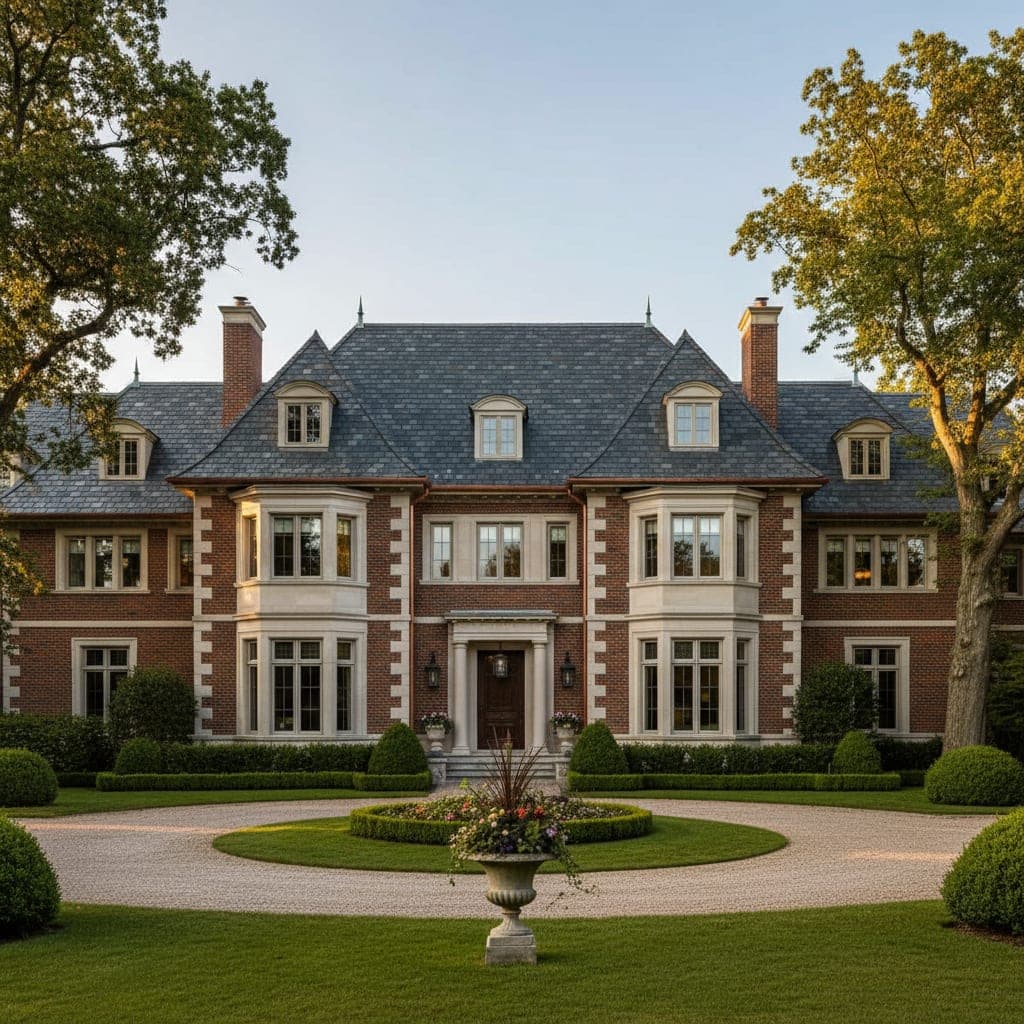
From authentic Vermont unfading black to English-style multi-color blends, our slate craftsmen install stone roofs designed to protect your home for a century or more. Schedule your on-site evaluation.